
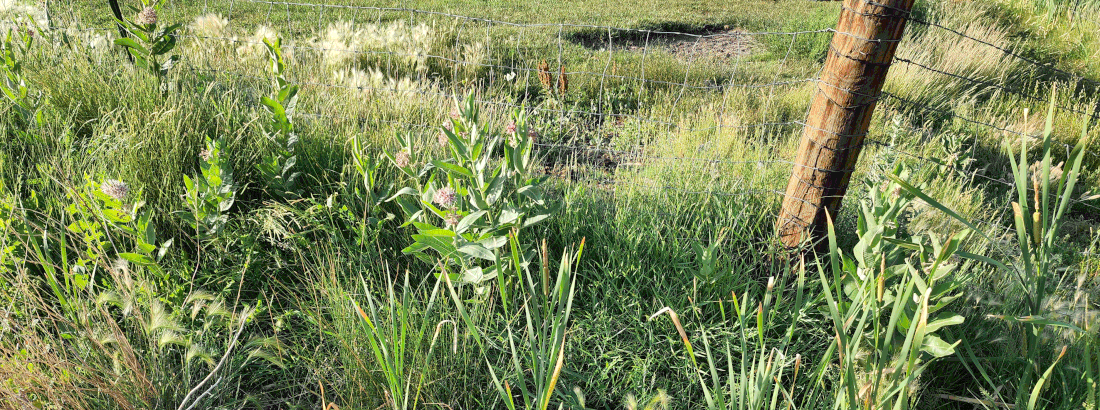
 I was so excited to see these growing along a ditch this year. I'm sure I pulled many Milkweeds out of the ground when I was younger. Now I don't see them anywhere. I've been trying to grow some in my yard, but I'm so much better at killing plants than nurturing them. But, this year, I finally found the right combination and got these beauties to grow and bloom. 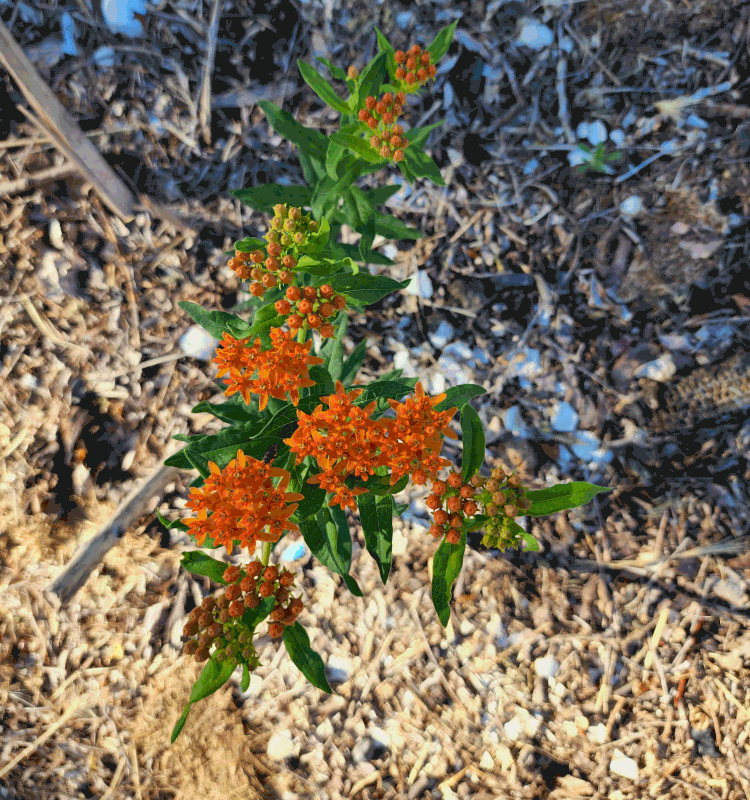 It seems a little strange that a group of native wildflowers could be so important and mean so much to people. But Milkweeds/Butterflyweeds are getting to be a big deal. I've been trying to decide how to share my fun flower pictures and flower excitement for a while. Today, the International Union for the Conservation of Nature listed the Monarch Butterfly as an Endangered Species. The Monarch has been a topic for many years as we watch their numbers decline. A lot of times there isn't much a single person can do when it comes to saving an entire species, but this case is different. One of the primary reasons for the decline of the Monarch Butterfly is loss of habitat and food. That habitat and food comes solely from the Milkweed family. Each area across the nation has its own type of Milkweed. These two are the native varieties for Utah. The butterflies eat the nectar from the flowers and lay their eggs on the leaves. Without Milkweed, we have no Monarchs. 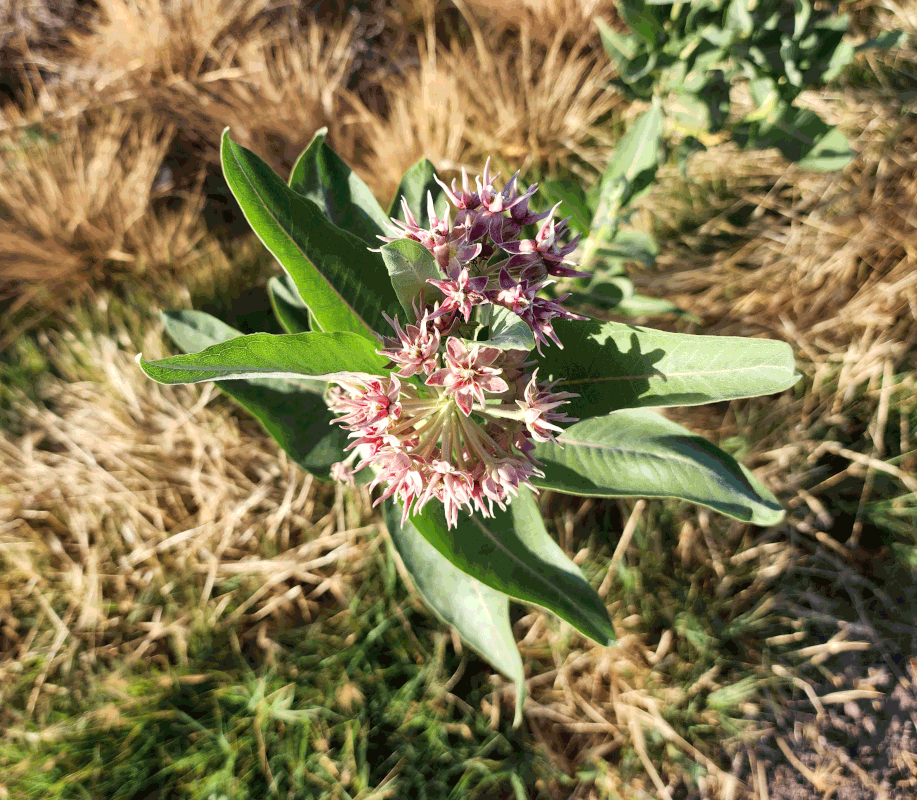 A Milkweed here and a milkweed there, may not be enough. But every time someone leaves a native Milkweed to grow and every time someone puts a few plants in their yard, it adds up, creating a network of habitat. That network of habitat allows the Monarchs to live and safely make their annual north and south migration. Besides, who doesn't want to sit outside on a cool evening and watch the butterflies flying around their yard.
0 Comments
Some years it feels like the plants are slow to wake up in the spring. It always makes it more fun then to go the nursery and see what plants are already awake and ready to shine. Huge thanks to Wildland Nursery in Joseph, Utah for their help with this post. 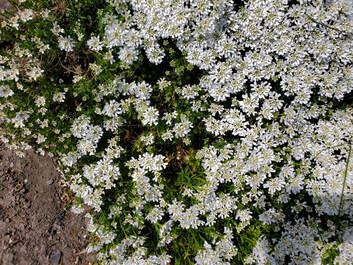 Candy Tuft (Iberis sempervirens) - This little perennial groundcover only gets about 12" tall by 12" wide. The leaves are evergreen so they will provide a touch of color in winter, when they aren't covered in snow. It blooms in spring and has been known to repeat bloom in fall, offering a lot of seasonal interest for such a small plant. 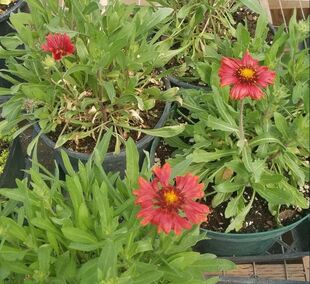 Burgundy Blanket Flower (Gaillardia aristata) - Blanket flowers come in shades of yellow, orange and red, frequently with multiple colors on one flower. These hardy flowers will grow up to 3 feet tall and 3 feet wide. They are adaptable on their water requirements and can be forgiving of a little abuse. These beauties will bloom for most of the summer and are good for attracting butterflies. 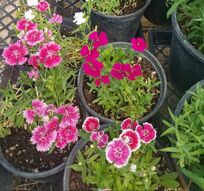 Garden Pinks (Dianthus sp.) - These little gems can grow about 12 inches tall by 18 inches wide. They come in a variety of pink shades and multi-tones. They will bloom from spring into summer. They are another hardy, drought tolerant perennial that will survive tough situations and still look great. They are even deer resistant. 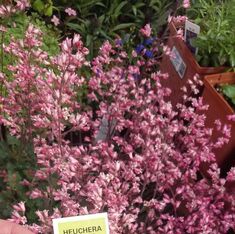 Coral Bells (Heuchera sp.) - These diverse wonders grow 12 to 18 inches tall and wide. Coral Bells are another evergreen perennial, so you can enjoy their leaves year round. Don't just think they are another little green winter blob. Coral bells not only bloom in a variety of shades including white, pink, and red, but the leaves can be green, purple, bronze or two tone (some even changes colors throughout the year). These lovelies bloom from spring to summer and enjoy full sun down to part shade. 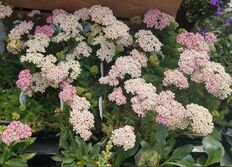 Yarrow (Achillea millefolium) - Yarrow are popular in dried arrangements, but they are even prettier in full color. They have fern-like leaves and come in a variety of colors, including several varieties that have multiple shades on the same plant. These are hardy desert perennials and will thrive in most locations. 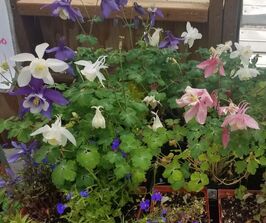 Columbine (Aquilegia sp.) - Columbine are a native streambank plant in Utah. The more cultivated varieties come in a large selection of colors. These plants can grow up to 3 feet tall by 2 feet wide. They are available in single colors including white, yellow and blue. They also come in several multiple color varieties, like this one. They will bloom from spring through summer and do well in both sun and part shade. 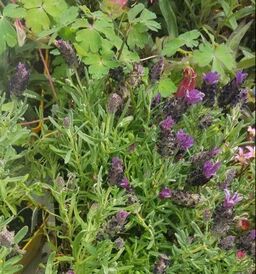 Lavender (Lavendula) - How can we have a spring all-star list and not include Lavender. Their purple blooms are so lovely and the fragrance can't be beat. There are many types of lavender, so make sure you choose the best one for you and your site. They like hot sun and range from 12 inches tall and wide to 3 feet tall and wide. You can even find lavender varieties that will rebloom in the fall.
The nurseries are open, so if your yard isn't blooming yet, get out and meets some plants at your local nursery. With all this talk of germs and illness, I thought a little medicine was in order. There are several native plants in Utah that have medicinal properties. We may not use them anymore, due to commercial products, but it is always nice to know what various plants can be used for. 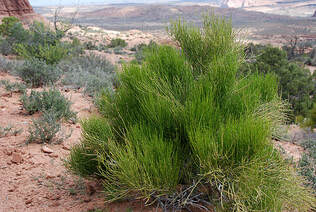 Ephedra viridis - Green Mormon Tea Not only does it have unique green stems with tiny leaves, our native Ephedra (with only low levels of Psuedoephedrine) helps with the common cold, clears congestion and other respiratory ailments, and urinary tract infections. 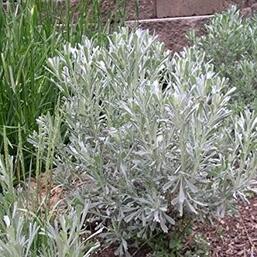 Artemisia tridentata - Bigtooth Sagebrush It is true, that "weed" that grows everywhere in Utah has medicinal uses. Sagebrush has been used to treat headaches, diarrhea, sore throat, vomiting and even bullet wounds (don't try that one at home). The made a tea of the leaves and used it for hair tonics and bee stings. The tea also worked for night sweats. 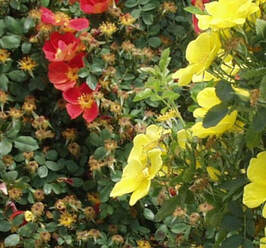 Rosa sp. - Rosehips We are so trained to deadhead the roses that we fail to benefit from rosehips. They are quite edible, and are supposed to be tasty. They are high in Vitamin C and bioflavonoids. Rosehips are also good for cleansing and colds and the flu. 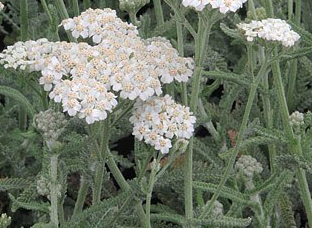 Achillea millefolium - Common Yarrow This little flower is another one that is good for helping with the common cold, flu, and fevers. It can also help with painful menstruation. It has even been known to help reduce bleeding. 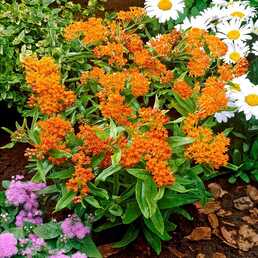 Asclepias tuberosa - Butterfly Weed
This is one of the ecologically "IN" plants. As the food source for Monarch Butterflies it is critical to the survival of Monarchs. Asclepias was named for the Greek God Asklepios - herbalist and physician. Butterfly Weeds are known to treat lung ailments. A few more of these planted around and we would all be breathing easier. It is winter. The skies can be gray, the grass is brown, and nothing is really happening outside (not even much snow). Spring is still a month away and it will be another month past that before the plants start coming alive. Many gardens don't start coming alive until May and June. Here are a few plants, that aren't bulbs, to help the garden wake up earlier. They will bring color to the cold months and feed the pollinators early.  Serviceberry (Amelanchier) - With April flowers these shrubs and small trees bring an abundance of white flowers before the plants leaf out each year. They are deer tolerant, hardy, require minimal maintenance, and drought tolerant. A great native to Utah, they also produce blueberry like berries (yum!) in August. There are varieties for small ornamental trees, large shrubs, or columnar hedgerows. 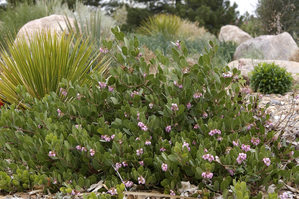 Bearberry (Arctostaphylos) - These evergreen small shrubs and groundcovers have pink to white blooms in March. They are in the Manzanita family, though only up to three feet tall. They tolerate hot sun and cool shade. These also produce small berries. Some varieties will turn red in fall for added year round interest. 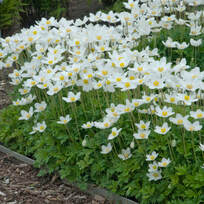 Snowdrops (Anemone sylvestris) - If says snow in the name, it must be blooming early. These lovely little flowers bloom in April. This perennial grows about 18 inches tall and spreads about 12 inches wide. They also have a double bonus of a possible second bloom in cooler autumns and they are fragrant. 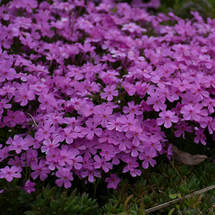 Creeping Phlox (Phlox subulata) - A great flowering perennial or groundcover that blooms in March or April in soft shades of white, pink, blue and purple. These evergreen perennials are drought tolerant, low maintenance, and deer resistant. So they will feed the pollinators and not the deer. They look great as a border plant in flower beds and work well in both annual beds and perennial beds. They may be waterwise, but they will look just as lush as any water hogging. 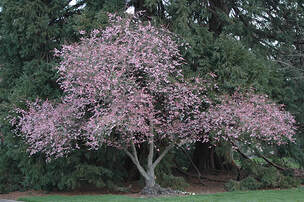 Flowering Cherry Tree (Prunus) - These cherry trees are known for their early spring flowers (before the leaves are out) and not for their fruit. A small ornamental tree, single or multi-trunk, they provide a beautiful accent to the landscape and are a available in a stunning weeping form. They can grow slowly and their water use is a little higher with a moderate rating, which does make them a happy camper for being situated in a lawn area.
A while back a saw a post about the plight of the Monarch Butterfly. One person asked what we could do about a species going extinct. Another person responded that there was nothing that we could do. How can you or I as an individual, with minimal resources, help an entire species from going extinct. Picture this, you are on a long road trip. You hit that lonely stretch of road where the next services are 100 miles away. What do you do? You check gas, you check food and water, you make sure that you are set to travel another 100 miles. Maybe you stop just in case. Now what happens if that next gas station is closed. What will you do? You run out of gas, nobody is around, and you have no cell signal. You are stuck. All you need is one gas station or one lonely house. This is a major issue that the little Monarch Butterflies are having. They have a very specific food supply, the Milkweed or Butterfly Weed. They wont eat anything else. When their native habits were developed for housing and roads, their food source was removed. 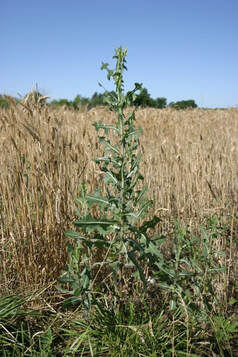 I said Milkweed, now you're thinking about those hideous, ugly, milky weeds that are trying to invade your yard. Maybe they look something like this guy on the left. That is not what we are talking about, this ugly guy is called Prickly Lettuce, though he does have milky sap. Milkweeds, which are not very weedy at all, are perennials that are native to much of the United States. There are several varieties, for Utah, the most popular variety is the Butterfly Weed that blooms Orange in summer and fall. They can be very showy and have unique blooms. They are hardy, don't require much water, and they don't take a lot of work. So they are an easy plant to keep in your yard. They look great massed, but can be used as an accent plant too. It would be great if everyone planted an area of native plants, or a miniature prairie, or just a few plants in their yard. But maybe you don't want to change things that much. Consider this, take our road trip scenario and put it into the perspective of our poor little butterfly. The Monarch can cover a large territory. She's been flying around looking for food for quite some time. She can't find anything that will suit her. She's growing tired, she's starving. She only needs one plant. One plant can sustain multiple butterflies. Every house, even apartments, can find a space for one plant, or one pot. Sometimes making a difference is hard, but just a few scattered plants every mile or so, can make a significant difference in the survival of the Monarch Butterfly. You CAN make a difference.
There is nothing so annoying as putting in a new plant just to go out a few months later and see that the neighborhood wildlife has been feasting on your plants. Some animals tend not to eat certain plants, but when an animal is hungry and has nothing else, they will eat anything. So here are 10 plants that should be avoided when hungry animals are anywhere nearby. 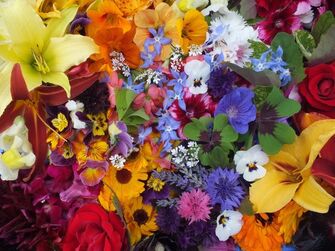 In no particular order: 1 - Cercis canadensis (Eastern Redbud) - a beautiful small tree and loved by many animals 2 - Euonymus - a popular hedge bush with varieties including variegated leaves and Burning Bush all of which are super tasty to wildlife. 3 - Hemerocallis (Daylily) - they come in varieties other than yellow and all make a sweet treat for animals. 4 - Hosta - they are great for shade, have lots of varieties and animals will eat them like crazy. 5 - Rosa (Roses) - they look mean, but they taste so sweet to those crazy animals. 6 - Tulipa (Tulips) - tasty on top and tasty on bottom, animals will leave nothing behind. 7 - Violas or Pansies - It doesn't matter that winter cold might kill them because they aren't likely to make it through summer. 8 - Berberis (Barberry) - tasty to rabbits and other critters, their berries will bring hungry animals running. 9 - Prunus cistina (Purpleleaf Sandcherry) - not as thorny as Barberries, but just as tasty. 10 - Aster - Lots of varieties to tempt those little critters into dining at your yard. 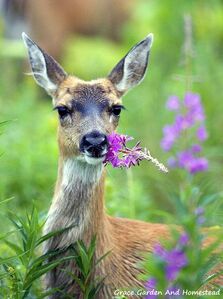 Is there anything to watch for in animal resistant plants?
Many animals do not like strong smelling plants, so even though there is no guarantee and Voles and Gophers will eat anything green and juicy, there are a few plants that are safer than others. Consider planting Alliums (Garlic, Onions), Salvia (Sages), Nepeta (Catmint), Mentha (Mints), Geraniums, or other plants which are tough, prickly or fuzzy. Though, don't think evergreen needles are safe, they might be pointy but some are still tasty. Also consider planting native plants since they are used to adapting to the native wildlife and may be able to handle the munching. With the leaves falling, and blowing wildly around us, it makes me think of all the fun plants and the variety of fall colors they bring into the landscape. One of the most popular fall plants is the Burning Bush. 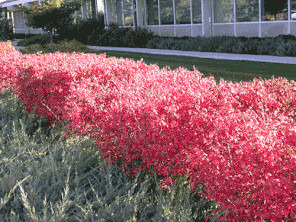 Euonymus alatus 'Compacta' or Dwarf Burning Bush is the most popular variety, though there are variations that will range from 5 feet tall to 20 feet tall. A tolerant and hardy green bush in spring and fall, with nondescript white flowers, the burning bush is known for the reliable brilliant red leaves in fall. The bush does well left in a natural form or pruned as a hedge for a more formal look. It is moderate on its water use and loves sun, but can handle part shade. 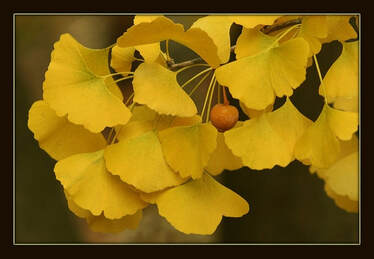 Ginkgo biloba 'Autumn Gold' - Autumn Gold Maidenhair Tree is a unique 50 foot tall tree with a brilliant golden color in the fall. A wonderful shade tree the Ginkgo has a distinct fan shaped leaf. The Ginkgo is one of the oldest tree species and is the last remaining in its plant division, all of the other species are now extinct. Look for male Ginkgos to avoid the messy fruits. Ginkgos come in several varieties with a spread of 15 to 30 feet. The trees require minimal water and are not too picky on maintenance. 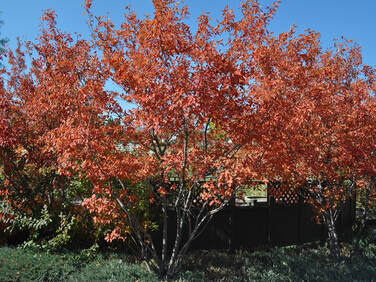 Amelanchier x grandiflora 'Autumn Brilliance' - Autumn Brilliance Serviceberry is a small, shrubby tree. It is hardy, drought tolerant and doesn't require a lot of water. Plants get about 25 feet tall and 10 feet wide. They make a nice small area tree, or shrubby screen. The trees have beautiful, pure white flowers in spring which are followed by edible purple berries. The berries look and taste like blueberries. Which is great for our climate since blueberries don't grow as reliably well here. The berries work well in jams or for snacking. 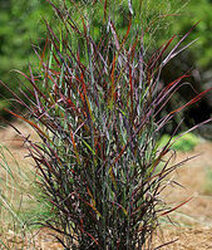 Panicum virgatum 'Hot Rod' - Hot Rod Switch Grass wont make you wait for spring to see it change color. This ornamental grass gets four feet tall and about three feet wide. The water use is low once the grass is established. Each spring the grassy blades emerge a beautiful blue-green color. As the season progresses the blades pick up red tints until fall when the whole plant turns a lovely burgundy color. Look for red seed heads to emerge around July. As with all ornamental grasses the only maintenance they take is to be cut back while dormant. Leave the dried grass until February for added winter interest in your garden. 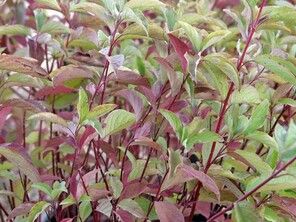 Cornus sericea 'Isanti' - Isanti Dogwood will grow five feet tall and eight feet wide. The bright red stems and green leaves host white flower clusters in spring. The green leaves turn purple-red in the fall and give way to the bright red stem in winter. This is a great plant for providing year-round interest without requiring maintenance. Dogwood like part shade and moderate water. If you like a little more summer interest look for Cornus alba 'Variegata' to provide a cream and green variegated leaf.
Someone once commented that they liked the idea of native plants, but they didn't think they were very colorful. Yet, I had a boss whose signature color was defined as "Rabbitbrush in the Fall". So in honor of the golden-yellow filling the hillsides this fall, I give you a selection native plants who are anything but dull and gray. 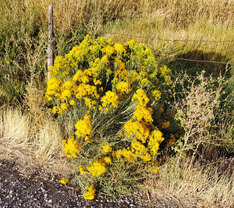 Now, Rabbitbrush may not work for everyone, but in a cultivated landscape the gray-green leaves can be very pretty and the vibrant golden tones throughout September can't be beat. Cultivated varieties can grow anywhere from 2 feet to 6 feet tall and as wide. They may require watering during the initial year or two, but afterwards they will thrive on neglect. They are harder and can handle most soils and environments, and they wont be bothered by deer or rabbits. If they get a little unruly, cut them back in early spring for a neater form. 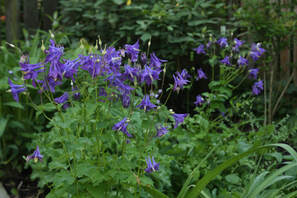 The Alpine Columbine is a lovely perennial with stunning blue flowers from May to July. They only get about 12 inches high and as wide, though some may decide to be bigger. Even though they are typically found around creeks and streams, they don't require a lot of water and can survive on little additional water. They are deer resistant and great for attracting pollinators, butterflies, and even hummingbirds. 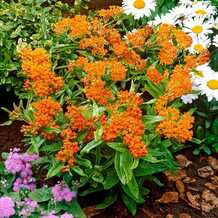 Most people think of milkweed as that tall spiny weed that invades their yards. But Butterfly Weed is a milkweed worth growing. Its a beautiful, hardy perennial that blooms from summer to fall. Most importantly, Butterfly Weed is absolutely vital to the Monarch Butterfly. It provides them food and habit, two things that they are very picky about. As we encroach on more and more wildland, it is important to remember to put some of those wild plants into our yards to protect the natural fauna and ecosystem. They can grow 3 feet tall and 2 feet wide, and also are deer resistant. 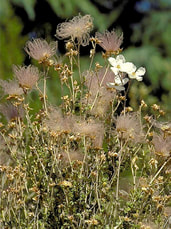 Apache Plume may look a little scraggly to some people, but the seed heads have a feathery look all of their own. They will grow about 4 feet tall and wide, though not too quickly. The blooms and feathery plumes will come out in summer. They don't require a lot of water and are deer resistant. Why not have a natural pink feather boa in your yard? 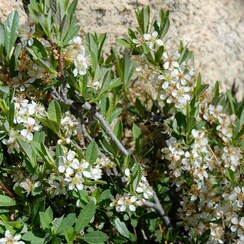 Looking for something more tame and more color variations, then the Western Sand Cherry is for you. The green to gray green leaves stay in beautiful form. With two varieties to choose from, both getting 6 feet wide, you can choose the smaller groundcover version that gets one foot tall or the larger bush form that will grow three to six feet tall. The small white flowers appear in summer and are followed by purple-black fruit. But wait until fall when the leaves turn a brilliant orange-red. They are slower growing, but wont require a lot of water. The deer do like them, but mostly for the berries, which you can eat too. 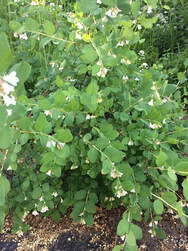 Mountain Snowberry are a little smaller bush getting only two to four feet tall and as wide. They have lovely little green leaves with dainty pink flowers in spring which are followed by snow white berries. This moderate growing shrub doesn't need a lot of water and wont be bothered by the deer. The wildlife may like the berries, but they are not edible for humans.
Check our Waterwise plant blog post for additional native perennials like the Penstemons and Blanket Flowers. We live in a beautiful area and sometimes fail to realize the wonderful plants that can grow here. Utilizing water-conserving, drought tolerant plants is not only a great idea for preserving water for drinking and the future, but it often means we get deer resistant, low maintenance plants as well. Below is a selection of a few great xeriscape plants for the home garden. 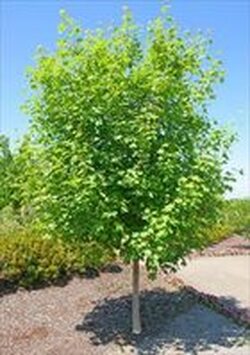 Acer grandidentatum - Bigtooth Maple This beautiful tree grows 25 feet tall and about 15 feet wide. Its a small tree for intimate areas and is generally grown with multiple trunks. It doesn't mind tough soils and high elevations. Not only is this tree native to Utah, but it turns a lovely orange-red color in fall. 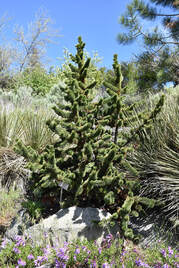 Pinus aristata - Bristlecone Pine A nice little evergreen tree that can handle tough areas. This tree gets 15 feet tall and 12 feet wide. This is the oldest living tree species, so no need to worry about when the tree will die. They are slow growing, but also are less likely to over-grow a space or get out of control. They don't require a lot of water, but still respond well to extra water if you want a fuller, faster growing tree. 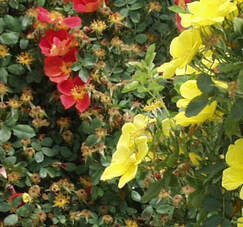 Rosa foetida 'Bicolor' - Austrian Copper Rose This is the rose for the indecisive. Not only is it a low maintenance shrub rose, but you get red and yellow blooms on each bush. Some varieties will have two-tone flowers, while others have the separate colored blooms. This bush grows up to 8 feet tall and about 5 feet wide. Its a nice hedge bush which will only require pruning for form and health, no dead heading needed. 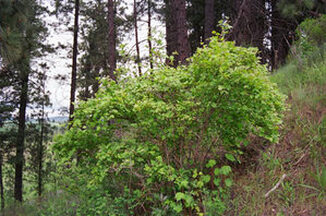 Physocarpus malvaceous - Mallow Ninebark Don't let this native bush fool you. This bush grows up to 6 feet tall and about as wide. It has pretty white flowers in the spring and red-brown leaf colors in the fall. Not impressed? Well, check out its other family members. Ninebarks are generally a low water plant. They come in sizes from 4 feet to 10 feet. While all have white flowers in spring, the leaf colors come in yellow, green, red, purple, and almost black. They are a great plant for adding color to your garden without wasting water. 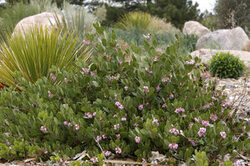 Arctostaphylos x coloradoensis 'Panchito' This low growing, evergreen shrub gets about 2 feet tall and spreads to about 5 feet wide. Its a broadleaf evergreen, so no needles or poky bits. It has lovely pink blooms in spring with red fruit in the summer, so there is never a dull time of year. It will grow in clay soils, but doesn't like to stay wet, so don't over-water this one. 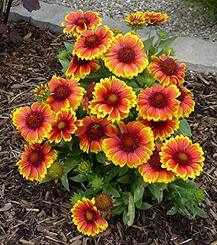 Gaillardia aristata - Blanket Flower These perennial flowers will get about 18 inches tall and spread about 2 feet wide. They come back every year, so no need to replant. They grow most anywhere and will bloom all summer long and well into fall, if dead headed. If your not into the multi-colored blooms, they also come in all red, deep burgundy red. 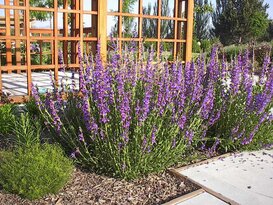 Penstemon strictus - Rocky Mountain Beardtongue
These perennial flowers grow nearly three feet tall and spread as wide. A hardy spring blooming flower that will grow anywhere and isn't found tasty by deer. Don't worry if the color isn't right for you, Penstemon come in a variety of colors (purples, blues, pinks, and reds), all of which attract hummingbirds. I was talking to a client about ornamental grasses this week. It always surprises me how little people use ornamental grasses. They provide something to look at year round, many are low water, they have beautiful seed heads, some change colors with the seasons, deer wont eat most of them (which is kind of too bad, since that would only make maintenance easier), and the only maintenance they require is to be cut down before they start to grow in spring. So here are three lovely, hardy, easy-grow ornamental grasses. Thanks to the Conservation Garden Park for all the wonderful pictures. Bouteloua gracilis - Blue Grama Grass - Utah Native This diverse little grass only gets about 24" tall. Its great for borders around beds and natural areas. It will naturalize, so plant is some where you can control it, or put it in a natural area where it can go wild. A pre-ermergent herbicide will help the seeds from sprouting. You can also use this beauty as a low-water lawn substitute and mow it like you would a Kentucky Blue Grass lawn. The seed heads will turn purple in fall. Miscanthus sinensis 'Gracillimus' - Maiden Grass This beauty can get up to seven feet tall. But you can cut it back farther in the spring if you want it to stay a little shorter. The red seed heads are later to bloom in the year than other grasses, but dry to wonderful tan plumes for winter. Its a great, year-round interest grass and is known for its reliability. The Miscanthus are a little less cold hardy, so keep this guy in town and away from the cabin. Erianthus ravennae - Hardy Pampas or Ravenna Grass
This giant among ornamental grasses can grow up to 12 feet tall. The grass portion through summer is pretty and large enough on its own, but watch out for when the seed plumes start to grow because this kid knows how to put on a show. It is known for its large seed plumes. The plumes are also great in dried flower arrangements. This grass will also self-sow, so make sure to remove the seedlings or plant it in an area that it can naturalize. |
AuthorLandscape Architect, Lover of the Outdoors, and Caretaker of a Husky. Archives
July 2024
Categories |


 RSS Feed
Site powered by Weebly. Managed by SiteGround