
|
Someone once commented that they liked the idea of native plants, but they didn't think they were very colorful. Yet, I had a boss whose signature color was defined as "Rabbitbrush in the Fall". So in honor of the golden-yellow filling the hillsides this fall, I give you a selection native plants who are anything but dull and gray. 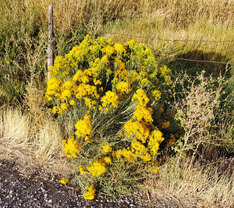 Now, Rabbitbrush may not work for everyone, but in a cultivated landscape the gray-green leaves can be very pretty and the vibrant golden tones throughout September can't be beat. Cultivated varieties can grow anywhere from 2 feet to 6 feet tall and as wide. They may require watering during the initial year or two, but afterwards they will thrive on neglect. They are harder and can handle most soils and environments, and they wont be bothered by deer or rabbits. If they get a little unruly, cut them back in early spring for a neater form. 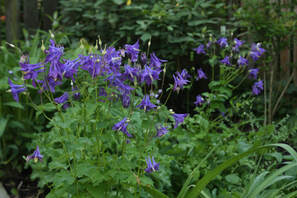 The Alpine Columbine is a lovely perennial with stunning blue flowers from May to July. They only get about 12 inches high and as wide, though some may decide to be bigger. Even though they are typically found around creeks and streams, they don't require a lot of water and can survive on little additional water. They are deer resistant and great for attracting pollinators, butterflies, and even hummingbirds. 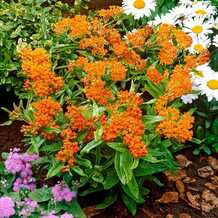 Most people think of milkweed as that tall spiny weed that invades their yards. But Butterfly Weed is a milkweed worth growing. Its a beautiful, hardy perennial that blooms from summer to fall. Most importantly, Butterfly Weed is absolutely vital to the Monarch Butterfly. It provides them food and habit, two things that they are very picky about. As we encroach on more and more wildland, it is important to remember to put some of those wild plants into our yards to protect the natural fauna and ecosystem. They can grow 3 feet tall and 2 feet wide, and also are deer resistant. 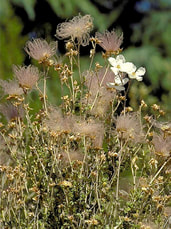 Apache Plume may look a little scraggly to some people, but the seed heads have a feathery look all of their own. They will grow about 4 feet tall and wide, though not too quickly. The blooms and feathery plumes will come out in summer. They don't require a lot of water and are deer resistant. Why not have a natural pink feather boa in your yard? 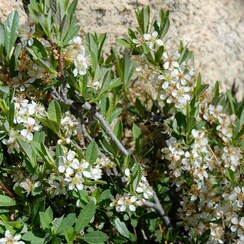 Looking for something more tame and more color variations, then the Western Sand Cherry is for you. The green to gray green leaves stay in beautiful form. With two varieties to choose from, both getting 6 feet wide, you can choose the smaller groundcover version that gets one foot tall or the larger bush form that will grow three to six feet tall. The small white flowers appear in summer and are followed by purple-black fruit. But wait until fall when the leaves turn a brilliant orange-red. They are slower growing, but wont require a lot of water. The deer do like them, but mostly for the berries, which you can eat too. 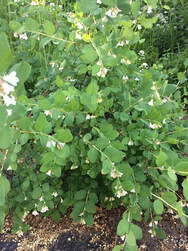 Mountain Snowberry are a little smaller bush getting only two to four feet tall and as wide. They have lovely little green leaves with dainty pink flowers in spring which are followed by snow white berries. This moderate growing shrub doesn't need a lot of water and wont be bothered by the deer. The wildlife may like the berries, but they are not edible for humans.
Check our Waterwise plant blog post for additional native perennials like the Penstemons and Blanket Flowers.
0 Comments
 We've talked about maintenance before and it really isn't that exciting, but most residents are hesitant to do more with their yards because of the perceived work that is involved. They do something nice and before they know it the weeds have taken over again and they decide it just isn't worth the work. The following maintenance suggestions come from the lead horticulturist at the Conservation Garden Park in West Jordan. He's been managing weeds in acres of landscape for years now.
First Tip: Never let a weed go to seed. Many weeds distribute by seed, so if the plant is removed before seeds are developed, then it can't reproduce. This doesn't mean you have to be checking on weeds daily, once a week is usually enough. A few extra minutes when you mow the lawn can save hours of weeding. Second Tip: Apply pre-emergent to your lawn in early spring when the Forsythias bloom to avoid crabgrass. Spray the dandelions in spring when the Lilacs are in bloom and in the fall when the leaves turn colors to prevent spreading. If you are nervous about Round-Up, a selective, broad-leaf weed killer is fine. Third Tip: To help prevent weeds in the first place, try not to disturb the soil (tilling, digging, etc). Disturbing the soil helps to germinate weed seeds. Apply properly composted mulch, 3 inches deep in any area that does not have a groundcover or grass. Use drip irrigation where possible. The weeds need water too and if the water is only around the plants it is harder for the weeds to grow. Only fertilize with what is needed and when it is needed. Fourth Tip: It is more ecologically friendly if you pull the weeds whenever you can. But to successfully kill a weed you need to be able to get all of the roots. A weed knife can be very helpful for pulling weeds. I use a dandelion digger. But, if you have Field Bindweed (and who doesn't) the weeds can grow 10 feet below ground and create a second tier of roots 5 feet below ground (makes since now why the weeds never die). This means the only method of control is to spray the weeds. Selective sprays like Weed-B-Gone and 2-4D work fairly well. Broad Spectrum sprays containing Glysophate like Round-Up and Killzall can work better, though they may kill more than you intended. A new rage is to use more "organic" solutions containing Vinegar, Salt, or Epsom Salts. The problem is that vinegar will only kill the plant above ground (all 10 feet of roots survive) and salt in any form will kill the soil and surrounding plants. Salt is very difficult to remove from the soil and requires a lot of water to leach it back out. You can try torching large bothersome areas, but the roots will still survive and if the roots aren't dead, the weed always comes back. We live in a beautiful area and sometimes fail to realize the wonderful plants that can grow here. Utilizing water-conserving, drought tolerant plants is not only a great idea for preserving water for drinking and the future, but it often means we get deer resistant, low maintenance plants as well. Below is a selection of a few great xeriscape plants for the home garden. 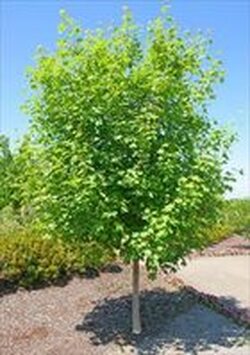 Acer grandidentatum - Bigtooth Maple This beautiful tree grows 25 feet tall and about 15 feet wide. Its a small tree for intimate areas and is generally grown with multiple trunks. It doesn't mind tough soils and high elevations. Not only is this tree native to Utah, but it turns a lovely orange-red color in fall. 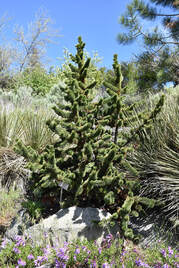 Pinus aristata - Bristlecone Pine A nice little evergreen tree that can handle tough areas. This tree gets 15 feet tall and 12 feet wide. This is the oldest living tree species, so no need to worry about when the tree will die. They are slow growing, but also are less likely to over-grow a space or get out of control. They don't require a lot of water, but still respond well to extra water if you want a fuller, faster growing tree. 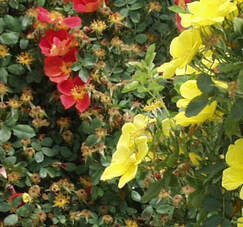 Rosa foetida 'Bicolor' - Austrian Copper Rose This is the rose for the indecisive. Not only is it a low maintenance shrub rose, but you get red and yellow blooms on each bush. Some varieties will have two-tone flowers, while others have the separate colored blooms. This bush grows up to 8 feet tall and about 5 feet wide. Its a nice hedge bush which will only require pruning for form and health, no dead heading needed. 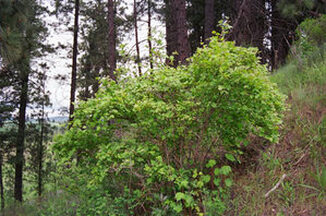 Physocarpus malvaceous - Mallow Ninebark Don't let this native bush fool you. This bush grows up to 6 feet tall and about as wide. It has pretty white flowers in the spring and red-brown leaf colors in the fall. Not impressed? Well, check out its other family members. Ninebarks are generally a low water plant. They come in sizes from 4 feet to 10 feet. While all have white flowers in spring, the leaf colors come in yellow, green, red, purple, and almost black. They are a great plant for adding color to your garden without wasting water. 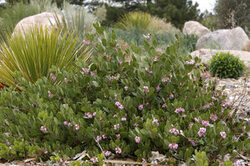 Arctostaphylos x coloradoensis 'Panchito' This low growing, evergreen shrub gets about 2 feet tall and spreads to about 5 feet wide. Its a broadleaf evergreen, so no needles or poky bits. It has lovely pink blooms in spring with red fruit in the summer, so there is never a dull time of year. It will grow in clay soils, but doesn't like to stay wet, so don't over-water this one. 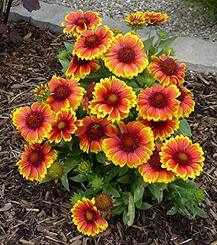 Gaillardia aristata - Blanket Flower These perennial flowers will get about 18 inches tall and spread about 2 feet wide. They come back every year, so no need to replant. They grow most anywhere and will bloom all summer long and well into fall, if dead headed. If your not into the multi-colored blooms, they also come in all red, deep burgundy red. 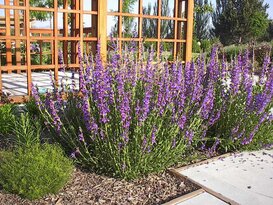 Penstemon strictus - Rocky Mountain Beardtongue
These perennial flowers grow nearly three feet tall and spread as wide. A hardy spring blooming flower that will grow anywhere and isn't found tasty by deer. Don't worry if the color isn't right for you, Penstemon come in a variety of colors (purples, blues, pinks, and reds), all of which attract hummingbirds. 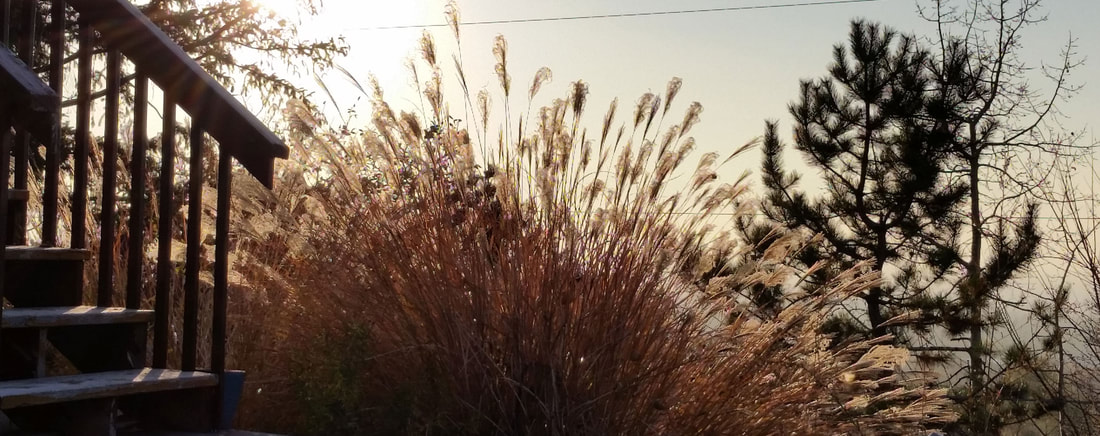 Its that time of year when the nurseries put their plants on sale and who doesn't love a good sale. I have clients asking if now really is a good time to put those bargain plants in their yards. And it all depends. We can have dry winters here. Last fall I ended up hauling buckets of water out to our new plants just to keep them alive. I also kept chasing the deer away and we still lost a couple of plants. New plants are more susceptible to drought, cold and browsing damage. The less time they have to establish, the easier they are to lose. There are a few things to consider when looking at planting in the fall.
First, if it is a dry winter, are you willing to make sure the plants are still getting water? Its cold, wetter and the plants are dormant, but they will still need regular water to come back to life in the spring. If there is no way you are willing to haul water or drag a hose, then wait to plant until spring. Second, fall planting can give your plants a great boost for the next years growing season and get them more established and heat tolerant sooner. So, if spring is going to be busy, then maybe fall is a good time for you. If you are looking for those plants to grow fast, than fall is a good option. Third, what kind of plant is it? Trees and large shrubs do fairly well with fall plantings. Smaller shrubs, perennials, and less cold tolerant plants do not. I had over 50% of one plant, a lilac broom, die during the winter when planted in the fall, though the other species planted at the same time had very little death. Some plants just do not do well being planted in the fall. A good nursery manager should be able to tell you which plants will fair better being planted in the fall. Fourth, watch the weather. We may not be able to predict what kind of winter we will have with temperatures and rain, though the weathermen will try, but listen to the predictions and pay attention to what the plants are doing. Does it look like we will have an Indian Summer? or an early winter? If fall is looking warm and wet, then plant. If the leaves are already turning and the rains aren't coming, then it may be better to wait until spring. Are they forecasting a cold, wet winter with lots of wind? Then maybe it is best to wait, not only will the plants have a harder time, but the deer will be hungrier too. Fifth, be realistic with yourself. New plants require care, especially for the first six months. When are you going to have the most time to watch and care for the new plants? Will you remember to water one little shrub in the middle of winter? Will your automatic sprinklers be able to water things regularly in the summer? And no matter when you plant, always place three inches of bark mulch around the new plants (though not touching the trunk) to keep them the right temperature and to help control the moisture level in the soil. |
AuthorLandscape Architect, Lover of the Outdoors, and Caretaker of a Husky. Archives
July 2024
Categories |
 RSS Feed
Site powered by Weebly. Managed by SiteGround