
|
It is winter. The skies can be gray, the grass is brown, and nothing is really happening outside (not even much snow). Spring is still a month away and it will be another month past that before the plants start coming alive. Many gardens don't start coming alive until May and June. Here are a few plants, that aren't bulbs, to help the garden wake up earlier. They will bring color to the cold months and feed the pollinators early.  Serviceberry (Amelanchier) - With April flowers these shrubs and small trees bring an abundance of white flowers before the plants leaf out each year. They are deer tolerant, hardy, require minimal maintenance, and drought tolerant. A great native to Utah, they also produce blueberry like berries (yum!) in August. There are varieties for small ornamental trees, large shrubs, or columnar hedgerows. 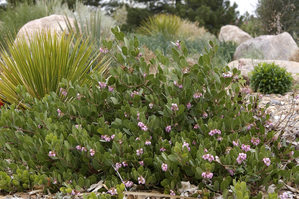 Bearberry (Arctostaphylos) - These evergreen small shrubs and groundcovers have pink to white blooms in March. They are in the Manzanita family, though only up to three feet tall. They tolerate hot sun and cool shade. These also produce small berries. Some varieties will turn red in fall for added year round interest. 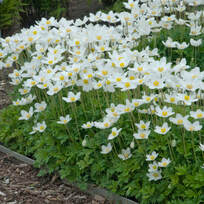 Snowdrops (Anemone sylvestris) - If says snow in the name, it must be blooming early. These lovely little flowers bloom in April. This perennial grows about 18 inches tall and spreads about 12 inches wide. They also have a double bonus of a possible second bloom in cooler autumns and they are fragrant. 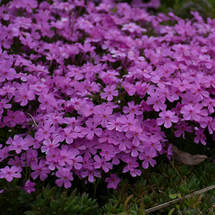 Creeping Phlox (Phlox subulata) - A great flowering perennial or groundcover that blooms in March or April in soft shades of white, pink, blue and purple. These evergreen perennials are drought tolerant, low maintenance, and deer resistant. So they will feed the pollinators and not the deer. They look great as a border plant in flower beds and work well in both annual beds and perennial beds. They may be waterwise, but they will look just as lush as any water hogging. 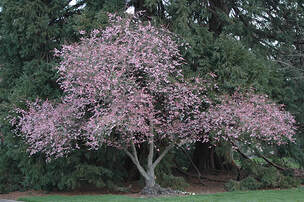 Flowering Cherry Tree (Prunus) - These cherry trees are known for their early spring flowers (before the leaves are out) and not for their fruit. A small ornamental tree, single or multi-trunk, they provide a beautiful accent to the landscape and are a available in a stunning weeping form. They can grow slowly and their water use is a little higher with a moderate rating, which does make them a happy camper for being situated in a lawn area.
0 Comments
Your comment will be posted after it is approved.
Leave a Reply. |
AuthorLandscape Architect, Lover of the Outdoors, and Caretaker of a Husky. Archives
July 2024
Categories |
 RSS Feed
Site powered by Weebly. Managed by SiteGround