
|
I love plants. I love lots of plants, but I was not blessed with a green thumb. I am pretty good at accidentally killing plants. I was looking at another blog post about hard to kill houseplants. I have killed at least two of the 14 plants on their list and I've only owned about five different types of houseplants. This is probably why I like native plants so much. I need a plant that can thrive on abuse and neglect. We have put 19 plants in our yard in the past three years, eight of them are now deceased. Some got under-watered because I am not good at dragging a hose. Some were eaten by deer. One got kicked out of the house and couldn't take the winter. And I'm still going to claim that one was depressed because our neighbor got rid of it and it just didn't like our yard. But plants are expensive and nobody wants to waist money on a plant that wont survive for even one year. So here is my list of hard to kill plants, aka plants that even I haven't killed. 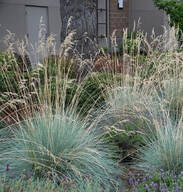 Ornamental Grasses - We have owned Giant Miscanthus and Pony Tail Stipas among others. They settle in and grow fast, only need to be trimmed down once per year, and most don't take a lot of water. Some, like the Stipa will spread seeds and reproduce, so if you aren't into baby grasses everywhere you will either need to collect the seed plumes or put down a pre-emergent herbicide. Others, like the Feather Reed Grass will not self-propagate. Grasses offer a variety of colors, textures and sizes. They also provide year-round interest if you wait until early spring to cut them back. 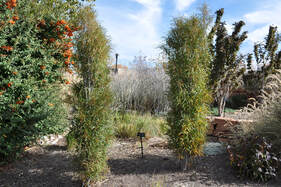 Fineline Buckthorn - I don't know why I haven't managed to kill these, but we have planted them at three different houses and they just keep surviving. They are hardy, low-maintenance and don't need a lot of water. They create a nice tall hedge, with a refined look and don't take up a lot of space. The deer will nibble on them a little bit, but so far they are more likely to trample them than eat them. They can grow slowly, so patience is helpful. 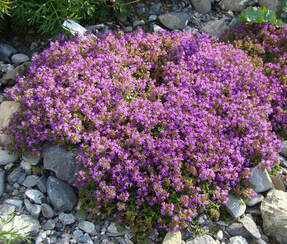 Creeping Thyme - We keep putting our Thyme is tough places and it just doesn't care. We used it in high traffic areas of our park strip and within a year it had filled in and was keeping the weeds back (and I didn't have to mow it). Now it sits at the base of our front steps in our stone addition to the sidewalk. It gets stepped on multiple times a day and doesn't get watered like it should. It doesn't much care. Thyme comes in a variety of colors and is considered evergreen. The Red Creeping Thyme has pink blooms in spring and turns red during the cold months, giving a nice pop of color in winter. Woolly Thyme has a lighter pink bloom and gray leaves. So you can mix the Thyme up and have a variety of interest anytime (any-Thyme) of year. 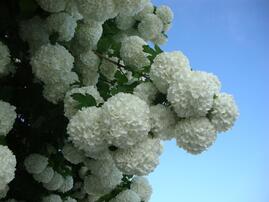 Snowball Bush - Viburnum are actually really good plants. They come in a range of sizes and they aren't water hogs. I grew up with a large one that wanted to take over the world, but you can get them in a refined 3-4 foot size. We planted these as little tublings (twigs) and they were full bushes within two years. They can grow like weeds, so check to make sure it will fit in the space you have. They will take pruning, so you can trim them back if they get too big. Their bloom time is short, but it is quite the show. They are a tough plant that can take a fair amount of neglect. 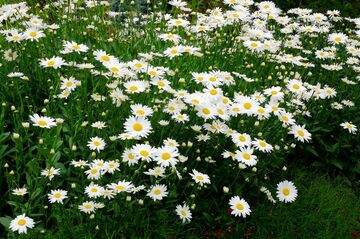 Shasta Daisy - A vigorous and unassuming perennial. They will bloom throughout the summer and only need to be cut back in fall. They don't even need to be dead-headed. We put a little one of these in our yard this year. Our neighbor pulled it out of her yard and left it on the street for dead. I put it in the ground the next day. It gets some water from the lawn sprinklers and anything that drips off of the roof. Still, it set root and was blooming again within a month. There are several to choose from with differing bloom sizes and plant sizes.
0 Comments
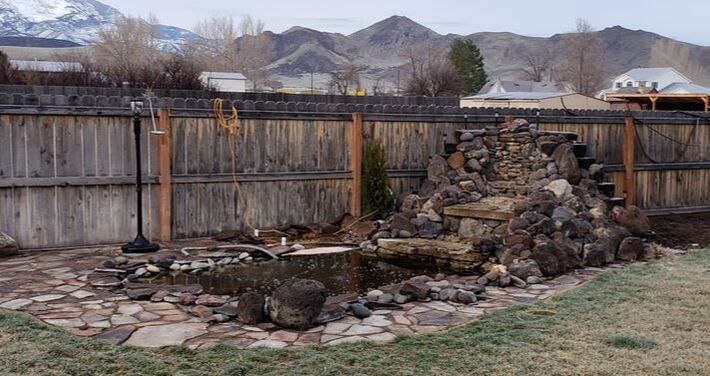 The ground plane of our yards can either work for us or against us. Maybe we want a slope for a waterfall. It could be that we have too much slope. There are a lot of ways to change the look of the ground plane to work better for us.
Retaining Walls are great for holding back the soil and giving us a flat spot of land. They can be expensive and when not done right they can cause great problems. Retaining walls can be out of wood, rock, block, tires, straw, and so much more. A good retaining wall will be sturdy and have a solid foundation that is buried in the ground. A lesser retaining wall will move over time. Another way to deal with slope is plants. Plants are great for keeping soil in place and adding life to a landscape. There are a variety of shrubs and groundcovers that will spread their roots and hold the soil in place. Lawn will hold the soil in place, but it is difficult to keep watered and you may need soccer cleats to keep from sliding down the hill when you mow the lawn. Adding dimension to a flat yard is much easier. Soil with or without walls can add hills and levels to a boring space. Added topography can create spaces and define use areas. Planter boxes can be used to create the feeling of changing grade without needing the space or added expense of imported soil. Planter boxes and walls can also help to diminish noises. A little change in the ground plane can bring many options of variation in the landscape. It can provide the option for a small wall, steps in the landscape for visual interest, a natural drainage channel for a dry creek bed, varied mounds throughout the yard. Recognizing the opportunities that our yards provide can bring so much more life and interest to the spaces we see every day. I always ask clients what are their favorite plants, what kind of plants they like, preferred colors and textures and so on. Most locations in the landscape have many plants that will thrive there and there may not be one best plant for that situation. So I try to find the plant that will be better, if not best, for them. Sometimes I choose wrong and then the plant is changed for something more to their liking. And sometimes we have plant debates. They see a beautiful plant they love, or they find a plant on the internet that is touted to be good for their location. Now they must have that plant and wont it look good right there. Its hard to believe, but somedays, the internet just doesn't know everything.
The internet does not know the specifics. You may get plants that aren't quite hardy enough for our region. You may get plants that don't do well in your particular type of soil. Often, people don't pay attention to the plant size. We love large plants, but they don't do well in small spaces and our yards are full of small spaces. Sometimes we create the impossible space and only a handful of plants will fit the need. This is where the internet fails. Searching for a container plant, that grows tall, is evergreen, flowers, is fragrant, can handle cooler temperatures, can take drying winds, and is formal in appearance does not work well. That's when it pays to ask a local expert. Whether they are a designer, a contractor, or a nursery professional; they can help you find a local plant that will fit your needs. You will likely have to make a concession somewhere. So always know what is the most important feature and what is the least important feature of the ideal plant. Of course, picking a plant that will thrive in your situation should not be negotiable. Plants should be an investment and paying to replace a plant that gets sick every few years is not a good investment. A quality local nursery (not a box store) will know their plants and the local area. They can tell you which plants will be eaten by deer. They will only stock plants that can handle the local soils and temperatures. They can tell you what plants work in containers. How to grow certain tricky plants. They also are usually familiar with a wide variety of plants and can help you come up with ideas of what plants will best meet your needs. A lot of trouble can be saved by taking the time to ask someone who knows the area and plants. Besides, talking to actual people shouldn't be that scary and who knows what ideas you might get when you leave the house. |
AuthorLandscape Architect, Lover of the Outdoors, and Caretaker of a Husky. Archives
July 2024
Categories |
 RSS Feed
Site powered by Weebly. Managed by SiteGround