
|
Someone once commented that they liked the idea of native plants, but they didn't think they were very colorful. Yet, I had a boss whose signature color was defined as "Rabbitbrush in the Fall". So in honor of the golden-yellow filling the hillsides this fall, I give you a selection native plants who are anything but dull and gray. 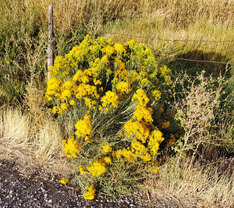 Now, Rabbitbrush may not work for everyone, but in a cultivated landscape the gray-green leaves can be very pretty and the vibrant golden tones throughout September can't be beat. Cultivated varieties can grow anywhere from 2 feet to 6 feet tall and as wide. They may require watering during the initial year or two, but afterwards they will thrive on neglect. They are harder and can handle most soils and environments, and they wont be bothered by deer or rabbits. If they get a little unruly, cut them back in early spring for a neater form. 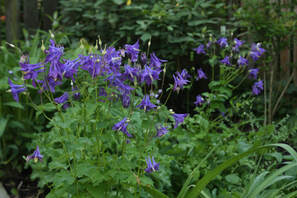 The Alpine Columbine is a lovely perennial with stunning blue flowers from May to July. They only get about 12 inches high and as wide, though some may decide to be bigger. Even though they are typically found around creeks and streams, they don't require a lot of water and can survive on little additional water. They are deer resistant and great for attracting pollinators, butterflies, and even hummingbirds. 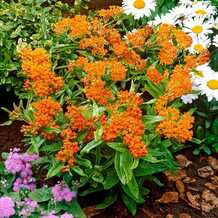 Most people think of milkweed as that tall spiny weed that invades their yards. But Butterfly Weed is a milkweed worth growing. Its a beautiful, hardy perennial that blooms from summer to fall. Most importantly, Butterfly Weed is absolutely vital to the Monarch Butterfly. It provides them food and habit, two things that they are very picky about. As we encroach on more and more wildland, it is important to remember to put some of those wild plants into our yards to protect the natural fauna and ecosystem. They can grow 3 feet tall and 2 feet wide, and also are deer resistant. 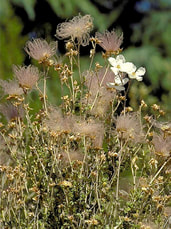 Apache Plume may look a little scraggly to some people, but the seed heads have a feathery look all of their own. They will grow about 4 feet tall and wide, though not too quickly. The blooms and feathery plumes will come out in summer. They don't require a lot of water and are deer resistant. Why not have a natural pink feather boa in your yard? 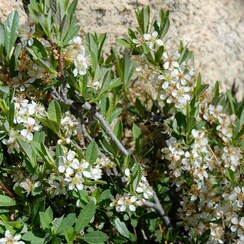 Looking for something more tame and more color variations, then the Western Sand Cherry is for you. The green to gray green leaves stay in beautiful form. With two varieties to choose from, both getting 6 feet wide, you can choose the smaller groundcover version that gets one foot tall or the larger bush form that will grow three to six feet tall. The small white flowers appear in summer and are followed by purple-black fruit. But wait until fall when the leaves turn a brilliant orange-red. They are slower growing, but wont require a lot of water. The deer do like them, but mostly for the berries, which you can eat too. 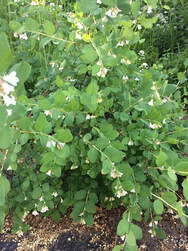 Mountain Snowberry are a little smaller bush getting only two to four feet tall and as wide. They have lovely little green leaves with dainty pink flowers in spring which are followed by snow white berries. This moderate growing shrub doesn't need a lot of water and wont be bothered by the deer. The wildlife may like the berries, but they are not edible for humans.
Check our Waterwise plant blog post for additional native perennials like the Penstemons and Blanket Flowers.
0 Comments
Your comment will be posted after it is approved.
Leave a Reply. |
AuthorLandscape Architect, Lover of the Outdoors, and Caretaker of a Husky. Archives
July 2024
Categories |
 RSS Feed
Site powered by Weebly. Managed by SiteGround