
|
The most frequently asked question we get, is do we do the installation and who in Central Utah does install landscapes and repair sprinkler systems. So, here is the list, if you are looking for a Landscape Contractor in Central Utah
Wildland Gardens in Joseph, Utah (801)750-7115 or (435)314-9340 Diamond K Landscaping in Monroe, Utah (435)527-5527 Baker Landscaping in Richfield, Utah (435)896-6623 Dickinson Landscaping in Richfield, Utah (435)979-6232 McKay & Associates in Mt. Pleasant, Utah (435)462-9136 G.C. Landscapes in Mt. Pleasant, Utah (435)469-2154 Green Landscaping in Ephraim, Utah (435)283-5300 Most of these contractors will book up for the year by early spring, so either plan to call early or be patient.
0 Comments
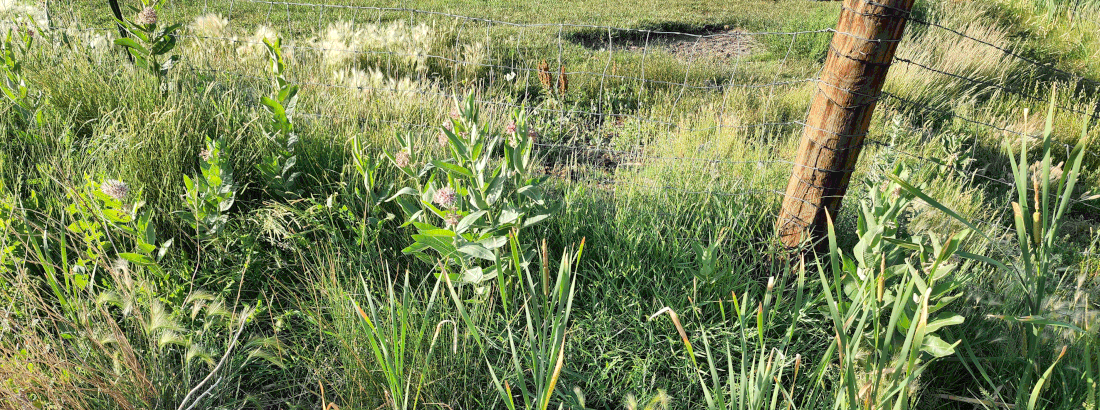 I was so excited to see these growing along a ditch this year. I'm sure I pulled many Milkweeds out of the ground when I was younger. Now I don't see them anywhere. I've been trying to grow some in my yard, but I'm so much better at killing plants than nurturing them. But, this year, I finally found the right combination and got these beauties to grow and bloom. 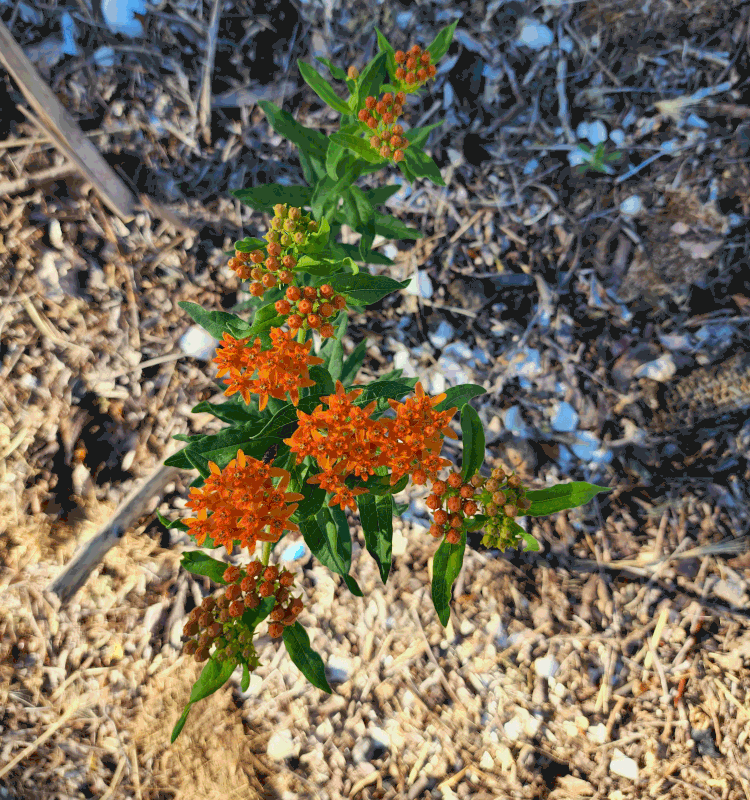 It seems a little strange that a group of native wildflowers could be so important and mean so much to people. But Milkweeds/Butterflyweeds are getting to be a big deal. I've been trying to decide how to share my fun flower pictures and flower excitement for a while. Today, the International Union for the Conservation of Nature listed the Monarch Butterfly as an Endangered Species. The Monarch has been a topic for many years as we watch their numbers decline. A lot of times there isn't much a single person can do when it comes to saving an entire species, but this case is different. One of the primary reasons for the decline of the Monarch Butterfly is loss of habitat and food. That habitat and food comes solely from the Milkweed family. Each area across the nation has its own type of Milkweed. These two are the native varieties for Utah. The butterflies eat the nectar from the flowers and lay their eggs on the leaves. Without Milkweed, we have no Monarchs. 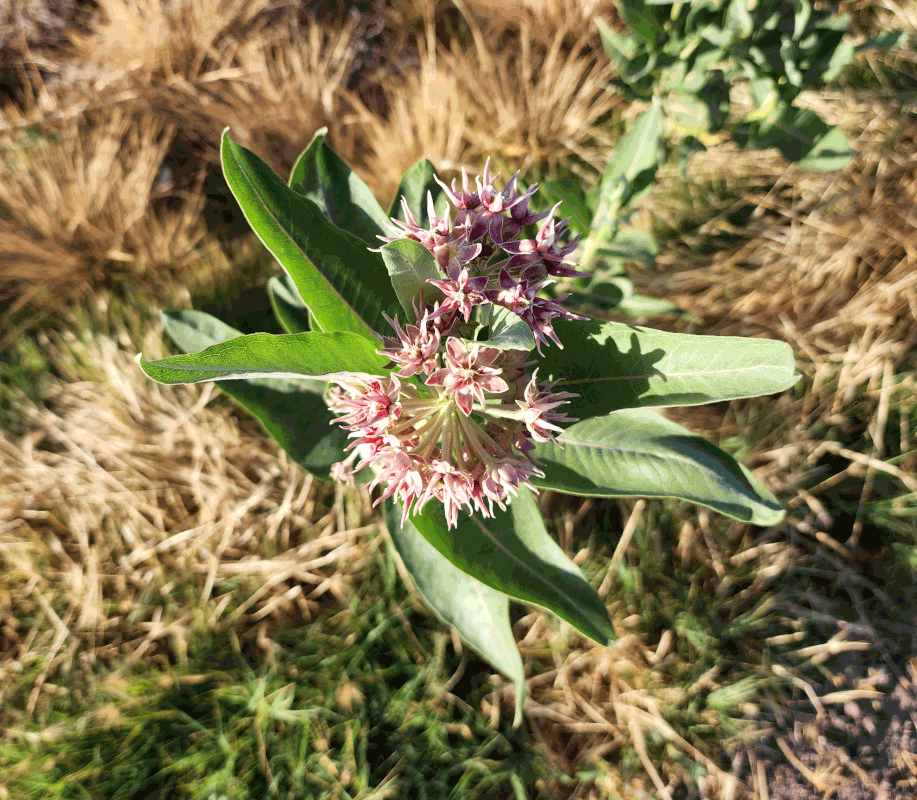 A Milkweed here and a milkweed there, may not be enough. But every time someone leaves a native Milkweed to grow and every time someone puts a few plants in their yard, it adds up, creating a network of habitat. That network of habitat allows the Monarchs to live and safely make their annual north and south migration. Besides, who doesn't want to sit outside on a cool evening and watch the butterflies flying around their yard.
I love bark mulch, maybe you have noticed. Many people when I try to tell them the benefits of bark mulch tell me that it will just blow away. I know it has happened and not all mulch is created equal. But a good shredded mulch with lots of fibers will have a greater staying power than the standard large chip or fine shreds. So here are two yards, that it didn't blow away. 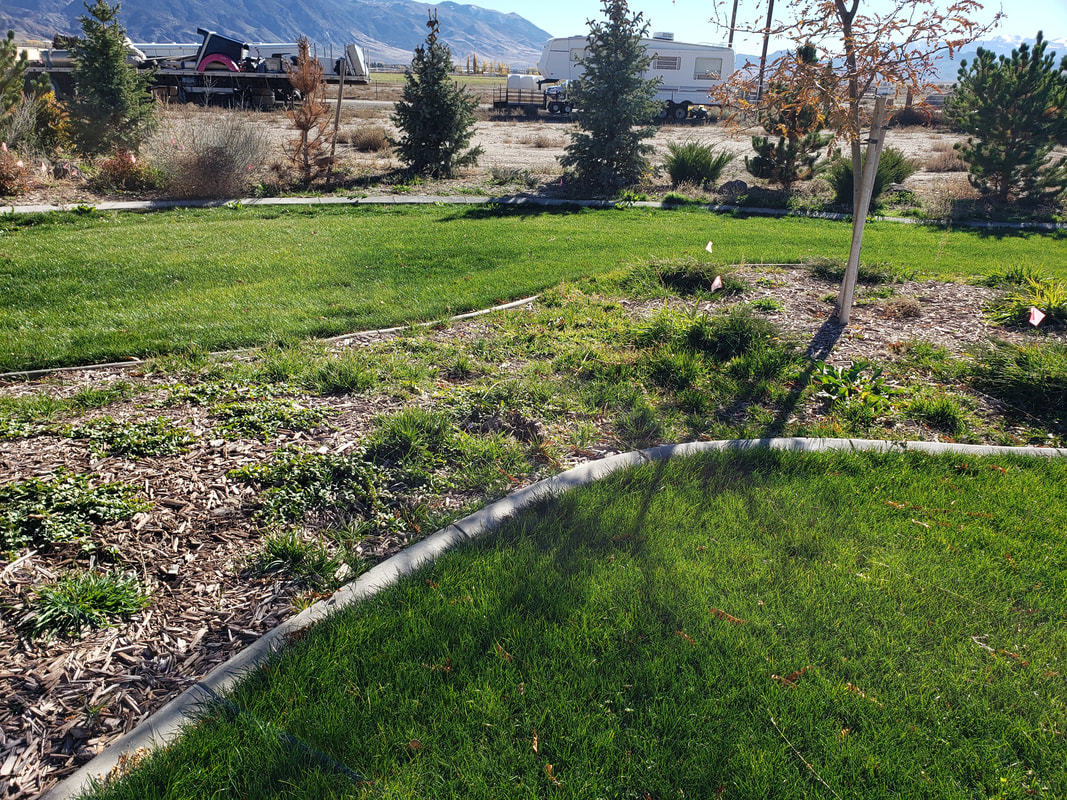 This is a clients yard where everything went wrong. He custom chose his mulch for optimum look and benefit. There were huge winds that blew silt from the neighboring field into his yard. The mulch didn't move, but in some places the mulch was buried in several inches of silt. It's not what anyone wants to happen to their yard, but I was pretty impressed that with that much wind and movement, the bark didn't move. 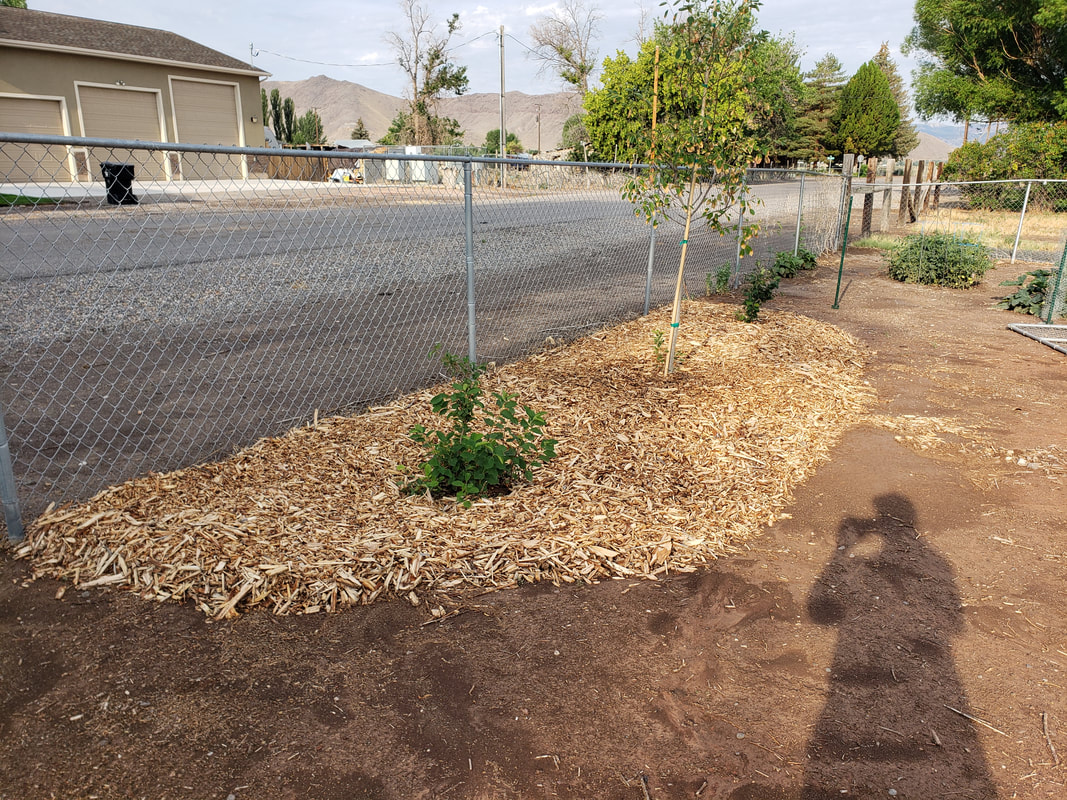 This is my test patch. These are larger mulch chunks than I would like, but this is cheap mulch via a rented shredded from taking down our Willow Tree. So, this is about as un-fancy as you can get when it comes to mulch. We have had some wild winds this year (so glad the Willow Tree is gone). We had one storm that nearly took out our shed with falling branches (just damaged the fence). But the mulch hasn't moved, not even the pile of mulch that is still sitting in the back and hasn't made it around the plants. We regularly have dirt blowing out of the garden, enough that I don't want to till the garden because it just blows away. But the bark isn't moving. The only things that have moved the bark are paws/feet and the water (you can see the little trail the heavy rains created). I figure that this area should be the windiest part of my yard and even the open pile hasn't moved in the wind.
While I can't guarantee that it will stay in your yard, I'm going to keep putting it back in my yard and recommending it. Its great for the plants, the soil, and water conservation. This area was the last spot in the yard to dry out. There really is nothing like a good shredded mulch for weed control and plant health. ev
I've had a lot of people contact me this year about a doing a plan for a low water, water-conserving, or xeriscape garden. Every time I get really excited thinking, "Yes, people are finally going to do something for the environment." But then, they tell me they want mostly rock with just a few ornamental plants, some of the plants aren't even water-conserving plants. It seems to be the new trend is to pull our lawn and replace it with rock or artificial turf. Which is great for conserving water, and we definitely need to do that, but is it really the answer to our drought and water issues. I've been thinking about this a lot and we often end up watching different climate shows and I'm always looking at assorted environmental topics. There are a lot of other people that are getting concerned about this trend. It seems good on the surface, but there is more to water conservation and water preservation than removing water using plants. Here are some key points to consider. 1- Many places have done studies about air temperature, surface temperature and soil temperature for different materials. Rock surfaces and artificial turf are as hot as pavement. Cities are getting warmer every year to due all of the pavement, its called "Urban Heat Island". Now our residential areas will start seeing the same effect as the lawns and plants are replaced with warmer surfaces. The hotter our environment is, the more water we need. You can check out more information on artificial turf here. https://www.architecturaldigest.com/story/artificial-turf-installment You can also check out how adding landscaping to a power plant reduced energy costs for their customers here. http://www.sustainablesites.org/burbank-water-and-power-ecocampus 2- On a large scale we are seeing whole regions become drier and drier. This is caused by a variety of sources, but is often tied to the degradation of landscapes and forests. You can find more information about desertification, its causes, and what can be done to change it here. https://www.carbonbrief.org/explainer-desertification-and-the-role-of-climate-change As more areas are studied and more people look into the environment they notice that we need plants to survive and everything is tied together. 3- What we do with out landscape can actually change the climate and environment around us. Maybe the effect isn't large on a small residential scale, but it is still something to consider. They have done numerous reforestation projects to try and reclaim degraded land and improve the economic situation of the surrounding people. You can check out one such effort here. https://onetreeplanted.org/pages/reforestation#:~:text=Reforestation%20can%20be%20defined%20as,%2C%20agricultural%20clearing%2C%20and%20development. They have begun to notice when the reforest and area that was desert, the climate changes. Where once they had to bring in and channel water to get the new trees to grow, once the forest is established, the area receives enough natural rain to support the forest. By reforesting areas, they are bringing increased natural rainfall to the area. That's just cool. 4- I like food. I like fresh food from my garden. I really am not looking forward to a day where my food is all mechanically produced and engineered. But to have fresh, natural food, I need pollinators. As habit (like dead leaves and wood chips) is lost, we start to loose our native bees (which are a major source of pollinators) and we are loosing our beautiful Monarch Butterflies. This trend will continue, if we keep replacing plants with other materials. One of the best ways to conserve water, and maybe even help bring in more rain, is to Go Native. Appropriate Native and even adapted plants will use a minimal amount of water the first two years after planting. After that, they won't need additional water, and they will keep the soil cooler, and the air cooler, and the insects happier, and maybe even you too. After all, would you rather open your front door and walk out into an oven where the air and ground are all hot, or into a natural area that you can sit and enjoy with a more comfortable temperature. 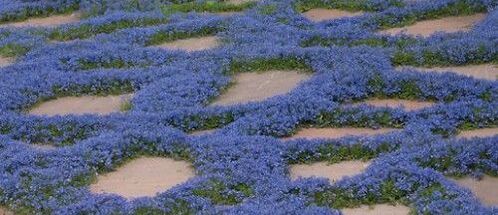 Sometimes it feels like the small things we do can't really make a difference in the larger world around us. I listened to a webinar this week about irrigation best practices. They talked about choosing the right parts, looking for a responsible manufacturer, understanding where the parts go at the end of life, but interestingly they started with choosing the right plants. Watering efficiently and responsibly starts with choosing the right plants and putting them in the right spot. They talked about making sure that you choose plants that will thrive in your situation. Since plants are an investment, then we should be mindful to choose plants that should do well and live up to their potential. It is exciting to see that more and more people are choosing to be mindful about the environment they create and the influence it has on the overall environment. With that I found another article on landscape fabric. This time from the Morton Arboretum. The more people research, the more they learn. This article pointed out that the perforated plastic fabrics can actually become clogged and not allow the water to get to the plants. So you can water your plant a lot, and it will still die from lack of water. So often we do things because that is the way they have always been done. Its what everyone else is doing. Then we wonder why it doesn't work so well for us, why are we having all these issues. With landscapes it is always good to stop and look at what is really happening. If you decide to use fabric, check to make sure the water is still going through, check to make sure your plants aren't being strangled by the fabric, check to make sure the soil isn't being compacted. Check your sprinkling system to make sure all of the heads are pointed in the right direction. Understand when your plants want the water the most and when they are dormant or semi-dormant. Be realistic about your plant choices. Are you planting a picky plant that will require more than you will give it, is there a more responsible option. People love Barberries because of the different leaf colors, but you can plant a Ninbark that has different colors, flowers, is hardier, and uses less water. It may cost more for a better plant, but remember the costs for water, maintenance, pruning, and fertilizer too. When you plant more responsible plants, nurture them appropriately and understand the environment around them, you improve the environment. Every improvement made spreads into the neighboring areas and continues out like ripples in the water. They are small steps, but they add up over all.
With highs at or near triple digits last week and now this week, its hard not to think about the heat and cooling off. Sebastian may light to sun bathe when it is 100 outside, but not me. 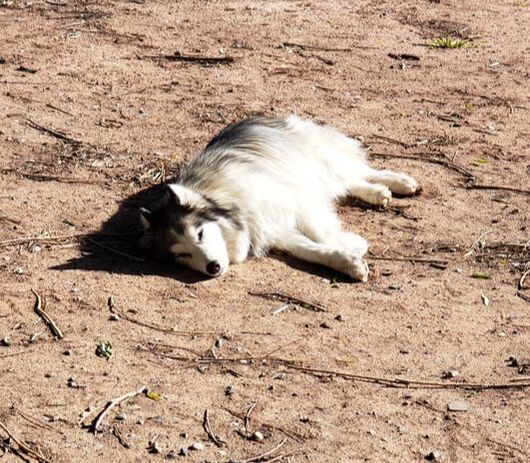 I'm all for the shade or staying in with the air conditioning. There are things you can do with your landscape to make inside your house more comfortable. Deciduous trees are great for providing shade in the summer and still allow the warmth from the sun in the winter. Planting a medium to large shade tree on the south side or west side of your house will help to shield your home from the sun's heat in the summer. You want to plant the tree close enough to shade the house, but not so close that it can later cause damage to the house. Generally, large trees don't need to be any closer than 30 feet from the house and still are effective at 50 feet. You want the tree close enough that it will shade the house starting in late afternoon, but not so close that the branches overhang your roof.
Rock mulch works to hold back the weeds and is generally low maintenance, but it can make your yard and home feel warmer. A vegetative groundcover, like lawn (though other plants are more effective) can make the surrounding are warmer. The cooler the air around your house, the cooler the air inside your house. Shrubs around the home's foundation also help to keep the home cooler. There are many ways to provide passive cooling to your home and the yard around it. Thinking of these options when you consider changes to your landscape will help you enjoy the space more and feel more comfortable when you are inside. Passive cooling by shading your home can also save you money for years to come. 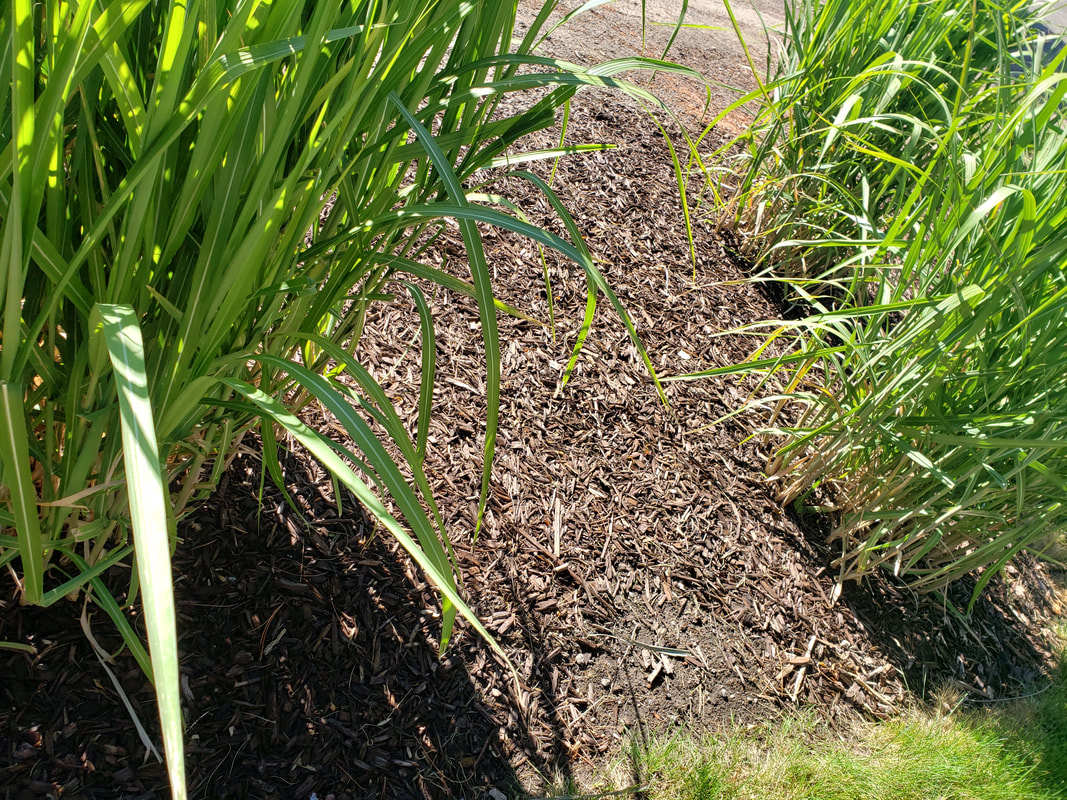 Can you really control the growth and spread of Morning Glory?
Three years ago we had a Morning Glory hedge in front of our house. We put in this planter and I spent at least a half hour each morning pulling out the weeds, over and over again. I finally got smart and started spraying the weeds with a general weed killer. It helped, but each week I still had to pull the stupid Tangle Vine from in the middle of these grasses. The roots were so tight, I couldn't imagine how the weeds could grow there, but every week they were back. The next year was better. We put down a thin layer of bark mulch and applied a pre-emergent herbicide. The weeds were better, but still the defiant weeds would grow among and inside the grasses. Every week the weeds were back, over and over again. This year we got the three inches of bark mulch down and reapplied the pre-emergent herbicide. So what have I found week and week. This is it. This picture. I have not once pulled Morning Glory out of the inside of the grasses this year. Most weeks I have not found any weeds growing in between the plants. Only about once per month do I have to spray a tiny, little weed. So three years of bark mulch, established plants, pre-emergent herbicide, and continuing mechanical and chemical control have created a space with minimal weeds. Three years of continued application of a maintenance system have greatly controlled the growth and establishment of Tangle vine. So yes, you can control Morning Glory. The question is always, when is it safe to plant. Many plants you can safely plant once the ground is thawed. New plants will require watering. So it is good to hold off planting until you can safely and regularly water the new plants. Plants do not like being coated in ice and the ice can cause cell damage, so watering should take place when the temperatures are safe from freezing and the water can be absorbed before the temperatures drop to freezing. Some perennials are more sensitive when newly planted and should be held off until after the last frost. This also applies to many annuals and vegetable plants. State Extension offices will post average last frost dates for each area, just make sure that you are looking at your specific area. Many people in Utah go by Mother's Day as the average last frost, but in Sevier County and other parts of Central Utah, the average last frost isn't until Memorial Day. A good way to tell is when all the established plants are in full leaf, then it is typically safe to plant. This year, we are having a Memorial Day Cold Snap Surprise. This is why the recommendation for us is to wait until after Memorial Day to plant cold sensitive plants. If you do have a cold sensitive plant and the temperatures become dangerously cold there are a few tips and tricks you can use to protect your plants. Covering the beds at night works great for smaller plants and gardens. Creating a hot cap, water wall, or other protective enclosure for individual plants can also work well. If you have a larger plant, like a tree, than you can wrap the trunk (though be cautious about leaving a wrap for too long as it can delay growth or encourage insect infestation) or you can string incandescent Christmas lights around the plant and leave them all night long. The heat the lights put off will keep the plant warm throughout the night. Many people will do this to keep Cacti alive in colder regions. Spring and Fall are great times to install new plants. Be careful about planting in the fall, some plants, like perennials, can require time to get established before the cold hits and will not do well planted in fall. Once the summer temperatures get above 90 degrees, the plants are more likely to go into shock. Most will recover, but you will need to be mindful of the plants and apply extra water (at night) to keep them alive and healthy. Last year it was fun to meet with several couples as they worked to redesign and improve their own yards. Because we are all working to avoid large groups and not get each other sick right now, we decided to do things a little bit different this year. We still want people to be able to have the yard of their dreams, and we know that many people can't afford to have someone design their yard for them, and rural Utah should get all of the benefits the larger cities do, so we are trying the Design Classes in a digital, virtual format. We will be starting the first class next week. You can register for it here. The first class will start at 7 pm, Thursday, May 14. We will be talking about measuring your yard, creating a wish list, and how to start seeing the advantages and disadvantages of your yard. The discussion time will last about 45 minutes. We will be doing it as a video conference, so you will be able to see the slideshow and ask questions. After the discussion we will have an hour or so that you can ask more questions, or we will divide the time up between participants and start looking at specific questions and issues with your individual yards. Because we are doing the video conference format, this gives you some great options. One - you get to stay home, not travel time, no babysitters, comfy couch if you like. Second - if you don't want to listen about everyone else's yards, you can skip out for a minute and do something else. Third - you can walk us around your yard. You wont need a functioning camera to watch the class, but should you choose, you can view the webinar on your cell phone (or switch to your cell phone after the first part) and ask specific questions about specific areas and be able to show the class all at the same time. Four - we dropped the price to $15 this year, so it is an even better deal and there is no question about inviting your whole family because you will control who gets to see your screen. Once you register, we will email you the information needed for the first class. These are recommendations to help you get as much as possible out of the class. Within 24 hours of the class, we will email you a link to the conference. You will be able to use that link at the class time to join us and start redesigning your yard. We are excited to be offering this opportunity to people and hope that you will join us. We will limit the number of people that can attend so that everyone will have a chance to ask their questions, so sign up today.
Some years it feels like the plants are slow to wake up in the spring. It always makes it more fun then to go the nursery and see what plants are already awake and ready to shine. Huge thanks to Wildland Nursery in Joseph, Utah for their help with this post. 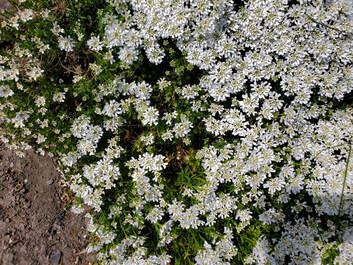 Candy Tuft (Iberis sempervirens) - This little perennial groundcover only gets about 12" tall by 12" wide. The leaves are evergreen so they will provide a touch of color in winter, when they aren't covered in snow. It blooms in spring and has been known to repeat bloom in fall, offering a lot of seasonal interest for such a small plant. 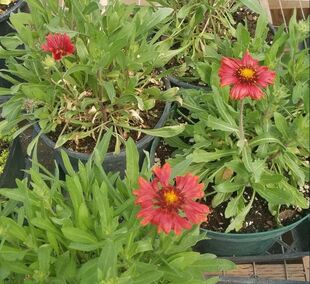 Burgundy Blanket Flower (Gaillardia aristata) - Blanket flowers come in shades of yellow, orange and red, frequently with multiple colors on one flower. These hardy flowers will grow up to 3 feet tall and 3 feet wide. They are adaptable on their water requirements and can be forgiving of a little abuse. These beauties will bloom for most of the summer and are good for attracting butterflies. 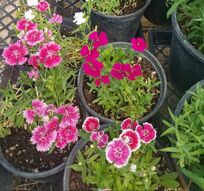 Garden Pinks (Dianthus sp.) - These little gems can grow about 12 inches tall by 18 inches wide. They come in a variety of pink shades and multi-tones. They will bloom from spring into summer. They are another hardy, drought tolerant perennial that will survive tough situations and still look great. They are even deer resistant. 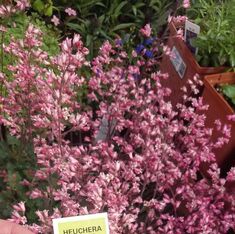 Coral Bells (Heuchera sp.) - These diverse wonders grow 12 to 18 inches tall and wide. Coral Bells are another evergreen perennial, so you can enjoy their leaves year round. Don't just think they are another little green winter blob. Coral bells not only bloom in a variety of shades including white, pink, and red, but the leaves can be green, purple, bronze or two tone (some even changes colors throughout the year). These lovelies bloom from spring to summer and enjoy full sun down to part shade.  Yarrow (Achillea millefolium) - Yarrow are popular in dried arrangements, but they are even prettier in full color. They have fern-like leaves and come in a variety of colors, including several varieties that have multiple shades on the same plant. These are hardy desert perennials and will thrive in most locations. 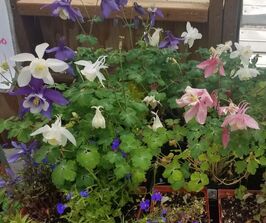 Columbine (Aquilegia sp.) - Columbine are a native streambank plant in Utah. The more cultivated varieties come in a large selection of colors. These plants can grow up to 3 feet tall by 2 feet wide. They are available in single colors including white, yellow and blue. They also come in several multiple color varieties, like this one. They will bloom from spring through summer and do well in both sun and part shade. 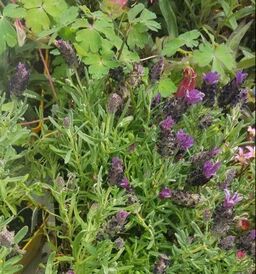 Lavender (Lavendula) - How can we have a spring all-star list and not include Lavender. Their purple blooms are so lovely and the fragrance can't be beat. There are many types of lavender, so make sure you choose the best one for you and your site. They like hot sun and range from 12 inches tall and wide to 3 feet tall and wide. You can even find lavender varieties that will rebloom in the fall.
The nurseries are open, so if your yard isn't blooming yet, get out and meets some plants at your local nursery. |
AuthorLandscape Architect, Lover of the Outdoors, and Caretaker of a Husky. Archives
July 2024
Categories |
 RSS Feed
Site powered by Weebly. Managed by SiteGround