
|
The most frequently asked question we get, is do we do the installation and who in Central Utah does install landscapes and repair sprinkler systems. So, here is the list, if you are looking for a Landscape Contractor in Central Utah
Wildland Gardens in Joseph, Utah (801)750-7115 or (435)314-9340 Diamond K Landscaping in Monroe, Utah (435)527-5527 Baker Landscaping in Richfield, Utah (435)896-6623 Dickinson Landscaping in Richfield, Utah (435)979-6232 McKay & Associates in Mt. Pleasant, Utah (435)462-9136 G.C. Landscapes in Mt. Pleasant, Utah (435)469-2154 Green Landscaping in Ephraim, Utah (435)283-5300 Most of these contractors will book up for the year by early spring, so either plan to call early or be patient.
0 Comments
I went to a tree pruning workshop over the weekend. With all the questions that were brought up, the series that stuck the most to me, was how do you know you are hiring the best landscape contractor or maintenance company and how do you know they are doing things correctly. So often we trust that if they are still in business, they must be doing things good enough. It was interesting to learn that there are only 5 certified arborists within 100 miles of Richfield, only one of which is within 30 miles. That means, unless you are lucky enough to find that one company, you really have no guarantee that the guy pruning your tree is trained and current on the healthiest and best practices for pruning your trees. That may not be a big deal for your shade trees, but it could be huge for your fruit trees.
So, how do you, as a resident, know who to hire or how they should be doing things. Here in Utah a great resource is the USU Extension (extension.usu.edu). They will have literature and links for all sorts of landscape, garden and home issues and questions. Much of the literature is for the entire state of Utah, but some things (like how frequently you need to water lawn) are set up by county. Another good resource is the International Society of Arboriculture (isa-arbor.com). On their website you can search for an arborist including the name of the arborist and their company. You can also find detail sheets for how to plant trees and shrubs, or even installing a sprinkler system. Another place to look for information on nursery plants is americanhort.org. They can help you see what you should be looking for in nursery plants and what information you should be able to find on the plant labels. A good thing to look for when hiring a company is their business licensing. The state licenses businesses in general, individuals in specific fields (like Landscape Architects), and then specific businesses. You can research a professional license at dopl.utah.gov or a general business license at secure.utah.gov/bes. 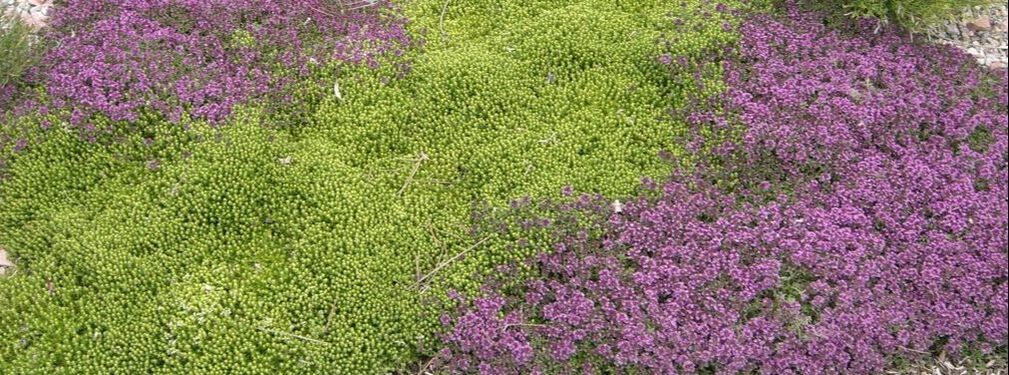 It is warming up and I am done with the cold and snow. I am ready to see some plants leafing out and flowers popping up everywhere. But is my yard ready? It is hard to remember all the work that needs to be done now to make the rest of the year easier. So here is a list of late winter/early spring chores to get your yard ready for a better summer.
1-PRUNE! - If you have fruit trees they should be pruned by mid-March and should not be pruned after buds start to appear. Ornamental and Shade trees can be pruned later. Proper tree pruning will help trees grow big and strong and will reduce the amount of branches that litter your yard whenever the wind blows. This is a good time to prune rose bushes, remove dead branches from other shrubs, and prune bushes for desired shape and size during the summer. This is also the time to cut back ornamental grasses and perennials so that the new sprouts can easily burst forth in the coming months. 2-PRE-EMERGENT HERBICIDE - The weeds are already starting to sprout, applying a pre-emergent herbicide now will help deter the flush of weeds that inevitably come with April's showers. Pre-emergent herbicide will need to be reapplied every two to three months, or any time you disturb the soil. The pre-emergent forms a barrier over the ground that prevents seeds from germinating. So be careful about applying it in areas that you have or will be seeding. Some pre-emergents also need to be kept away from food crops and new plants, so read the lable carefully. 3-CHEMICAL WEED CONTROL - Anytime a weed is vulnerable is a good time to spray it. Spraying in the spring when weeds are just getting established will help deter the weeds throughout the remaining growing season. Fall and Spring are the most effective times to spray super-hardy weeds like Bindweed (aka Morning Glory). 4-PLAN - If there is something you want to change in your yard, make plans to do it sooner than later. Spring is the best time to plant new trees, shrubs, and flowers. Deciding what you want to do now will help you get the plants you want and have them establish faster than waiting until summer. Remember that new plants require extra water, so don't start planting until you can safely run your sprinklers. Our weather is unreliable so don't count on rains to get those new plants established. I always ask clients what are their favorite plants, what kind of plants they like, preferred colors and textures and so on. Most locations in the landscape have many plants that will thrive there and there may not be one best plant for that situation. So I try to find the plant that will be better, if not best, for them. Sometimes I choose wrong and then the plant is changed for something more to their liking. And sometimes we have plant debates. They see a beautiful plant they love, or they find a plant on the internet that is touted to be good for their location. Now they must have that plant and wont it look good right there. Its hard to believe, but somedays, the internet just doesn't know everything.
The internet does not know the specifics. You may get plants that aren't quite hardy enough for our region. You may get plants that don't do well in your particular type of soil. Often, people don't pay attention to the plant size. We love large plants, but they don't do well in small spaces and our yards are full of small spaces. Sometimes we create the impossible space and only a handful of plants will fit the need. This is where the internet fails. Searching for a container plant, that grows tall, is evergreen, flowers, is fragrant, can handle cooler temperatures, can take drying winds, and is formal in appearance does not work well. That's when it pays to ask a local expert. Whether they are a designer, a contractor, or a nursery professional; they can help you find a local plant that will fit your needs. You will likely have to make a concession somewhere. So always know what is the most important feature and what is the least important feature of the ideal plant. Of course, picking a plant that will thrive in your situation should not be negotiable. Plants should be an investment and paying to replace a plant that gets sick every few years is not a good investment. A quality local nursery (not a box store) will know their plants and the local area. They can tell you which plants will be eaten by deer. They will only stock plants that can handle the local soils and temperatures. They can tell you what plants work in containers. How to grow certain tricky plants. They also are usually familiar with a wide variety of plants and can help you come up with ideas of what plants will best meet your needs. A lot of trouble can be saved by taking the time to ask someone who knows the area and plants. Besides, talking to actual people shouldn't be that scary and who knows what ideas you might get when you leave the house. A while back a saw a post about the plight of the Monarch Butterfly. One person asked what we could do about a species going extinct. Another person responded that there was nothing that we could do. How can you or I as an individual, with minimal resources, help an entire species from going extinct. Picture this, you are on a long road trip. You hit that lonely stretch of road where the next services are 100 miles away. What do you do? You check gas, you check food and water, you make sure that you are set to travel another 100 miles. Maybe you stop just in case. Now what happens if that next gas station is closed. What will you do? You run out of gas, nobody is around, and you have no cell signal. You are stuck. All you need is one gas station or one lonely house. This is a major issue that the little Monarch Butterflies are having. They have a very specific food supply, the Milkweed or Butterfly Weed. They wont eat anything else. When their native habits were developed for housing and roads, their food source was removed. 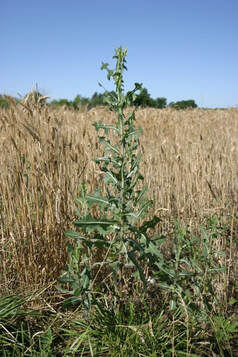 I said Milkweed, now you're thinking about those hideous, ugly, milky weeds that are trying to invade your yard. Maybe they look something like this guy on the left. That is not what we are talking about, this ugly guy is called Prickly Lettuce, though he does have milky sap. Milkweeds, which are not very weedy at all, are perennials that are native to much of the United States. There are several varieties, for Utah, the most popular variety is the Butterfly Weed that blooms Orange in summer and fall. They can be very showy and have unique blooms. They are hardy, don't require much water, and they don't take a lot of work. So they are an easy plant to keep in your yard. They look great massed, but can be used as an accent plant too. It would be great if everyone planted an area of native plants, or a miniature prairie, or just a few plants in their yard. But maybe you don't want to change things that much. Consider this, take our road trip scenario and put it into the perspective of our poor little butterfly. The Monarch can cover a large territory. She's been flying around looking for food for quite some time. She can't find anything that will suit her. She's growing tired, she's starving. She only needs one plant. One plant can sustain multiple butterflies. Every house, even apartments, can find a space for one plant, or one pot. Sometimes making a difference is hard, but just a few scattered plants every mile or so, can make a significant difference in the survival of the Monarch Butterfly. You CAN make a difference.
I was watching a USU webinar about the benefit of trees. We all know they provide much needed shade and are pretty to look at, but do trees provide other benefits too. They have done lots of studies about the economic implications of planting trees. They have even shown that tree pollen has less allergens then other plants. Some new studies are showing that a 35% to 40% tree canopy can help combat illnesses like depression and ADHD. Beyond that, they are finding that trees also help with asthma and cardiovascular diseases. To a lesser degree the studies are showing that trees can help obesity and diabetes. They can even improve healing and recovery. It is pretty cool the effect that trees can have on our lives.
Planting Trees for Health and Wellness Protection First - Trees help to reduce stress, mental illness, and provide a sense of social cohesion. Second - Trees can improve birth weight, provide pain relief, they reduce crime, and improve thermal comfort. Third - Trees increase the desire for activity, they help with weight loss, provide UV protection, and can improve sleep. No wonder why the animals and mother nature love trees so much. 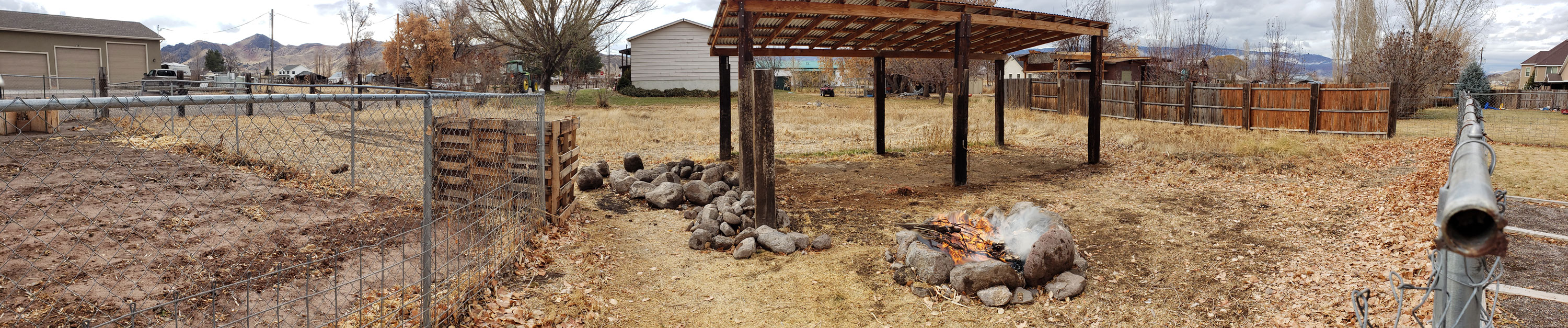 I get a lot of people who wonder what my yard looks like. It wont be on a garden tour anytime soon. We spent a lovely afternoon here in our picnic spot. I'm sure a few neighbors thought we were a little weird as we roasted hot dogs among the weeds. I frequently don't see my yard as it is, but as it someday will be. So this week we are daring to dream and looking at how a yard can develop into something wonderful even when the yearly budget is low. So welcome to the visual journey of our plan for the back lot. 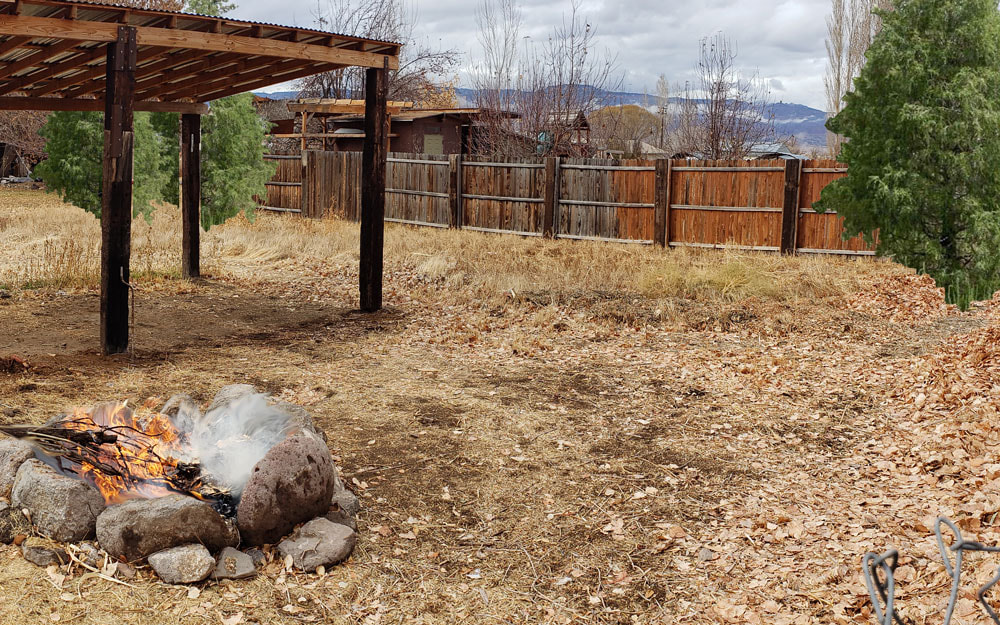 Our first goal is to create some year round privacy and color. This will be a xeric, native garden area (our not so mountainous retreat). So we will plant some juniper trees in the corners to provide the initial structure. They will also help to provide some shade on the house and main yard in the evening. 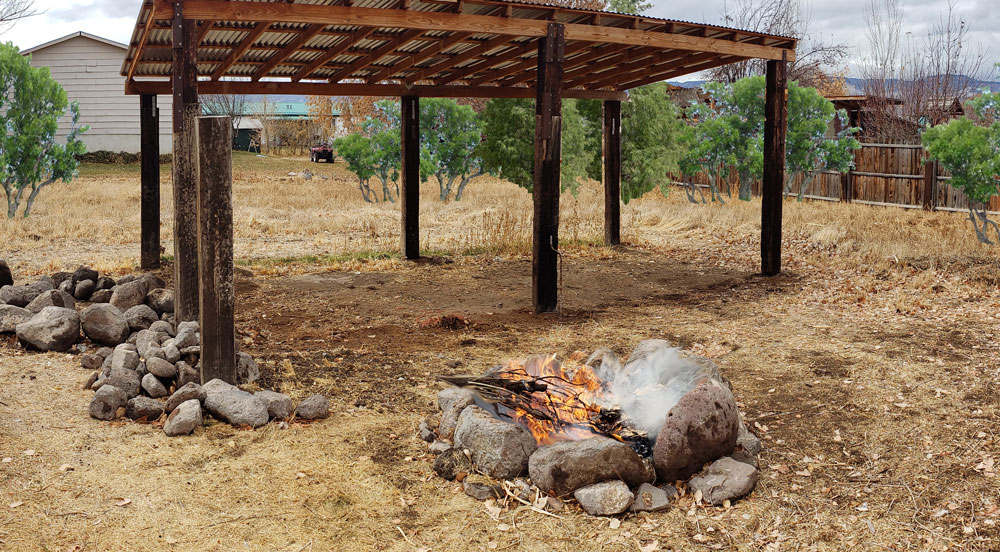 To continue the screen we will plant some Scrub Oaks along the fence lines and in other key areas throughout the lot. These will help to shade the "Picnic Shelter" and make the space more comfortable in the summer. 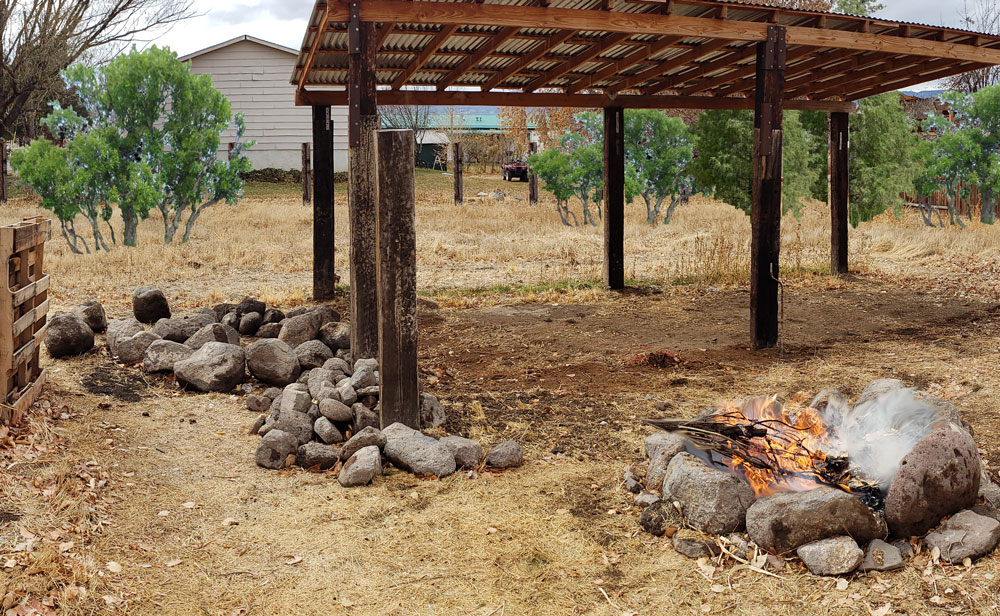 Sebastian is looking forward to the day that we get the yard fully fenced and securely fenced. So early on in the construction we will extend the fence out so that he can safely run and run and run. It will also help to save the young plants from getting eaten by the deer. 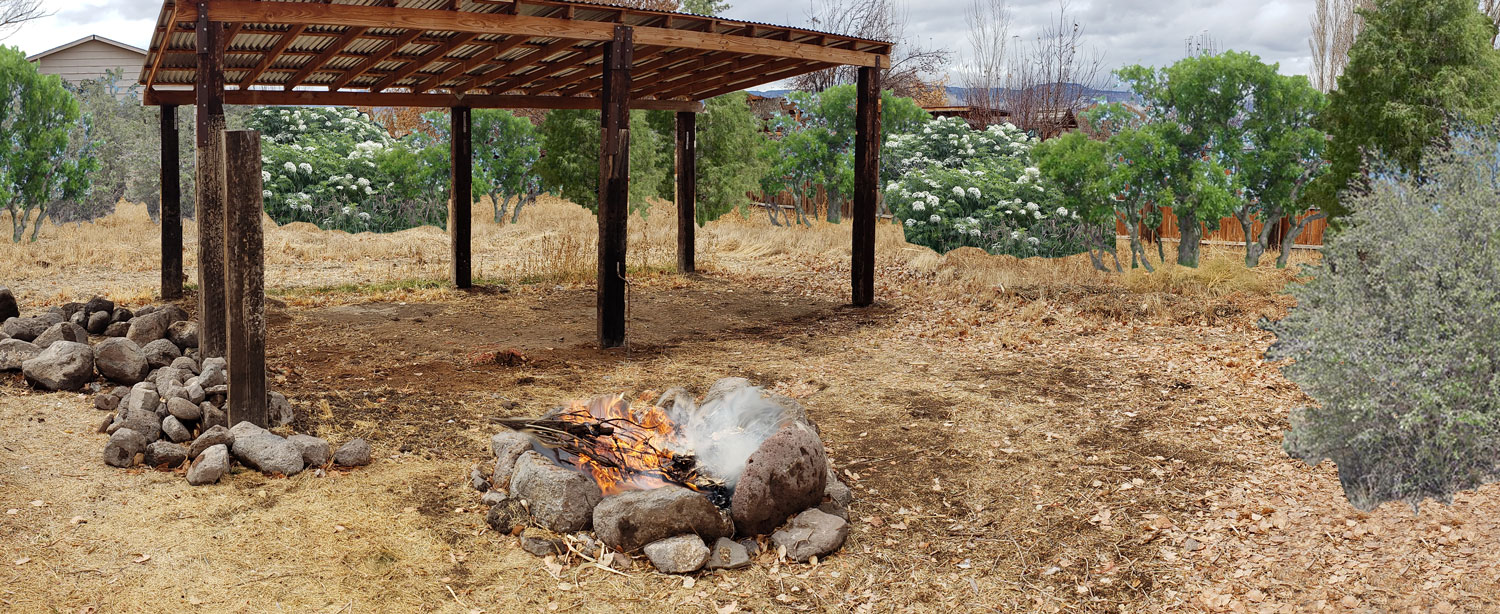 We really like multi-purpose plants, so a fair amount of space will be taken up by berry bushes like Serviceberries and Elderberries. They will provide screening, shading, and food for us and any critters that make it into the yard. 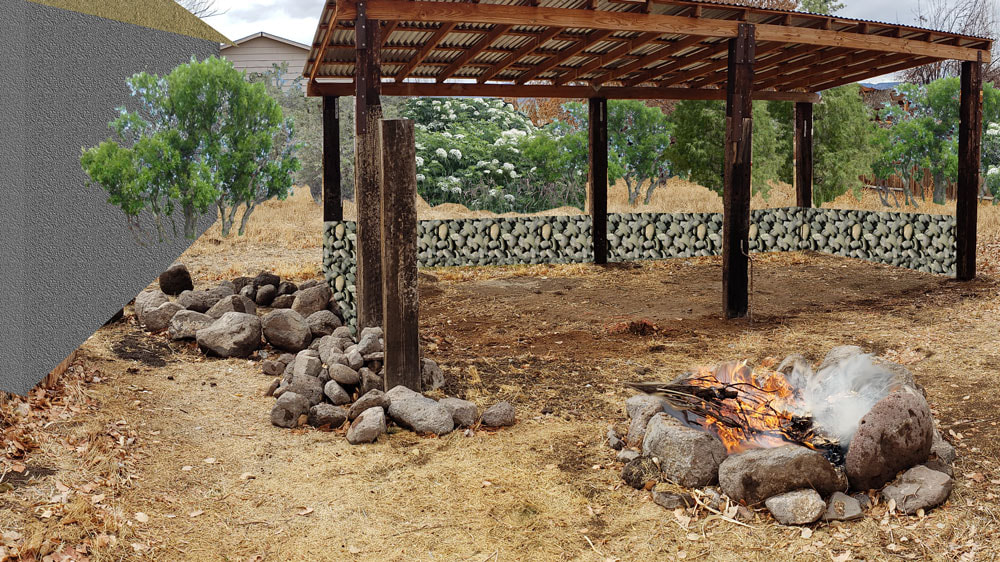 The hope is to put in a garage before we get to far along, but it may have to wait until the end. Large items always take more time to save up for than a shrub here and there. It would also be nice to rock in the shelter some for added protection from the elements and possibly extra seating. It also helps to get rid of our excess rock pile. 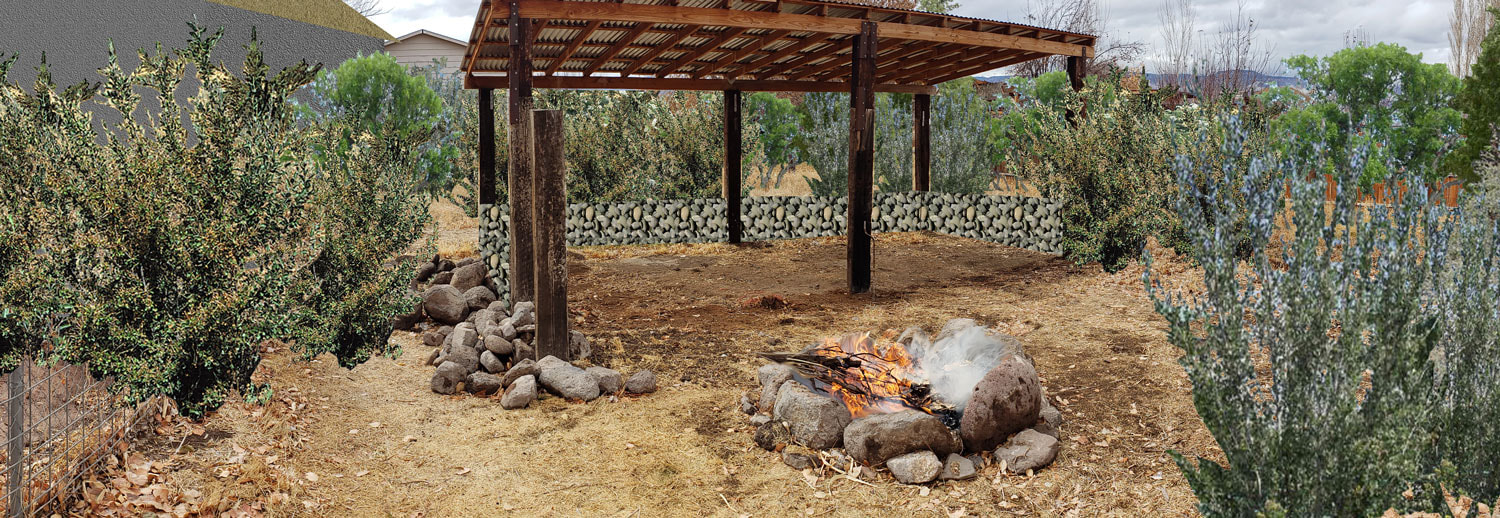 Then we'll start filling in with other large shrubs, like Mountain Mahogany. This will be when we start to define walking paths, screening areas, additional seating areas, and so on. 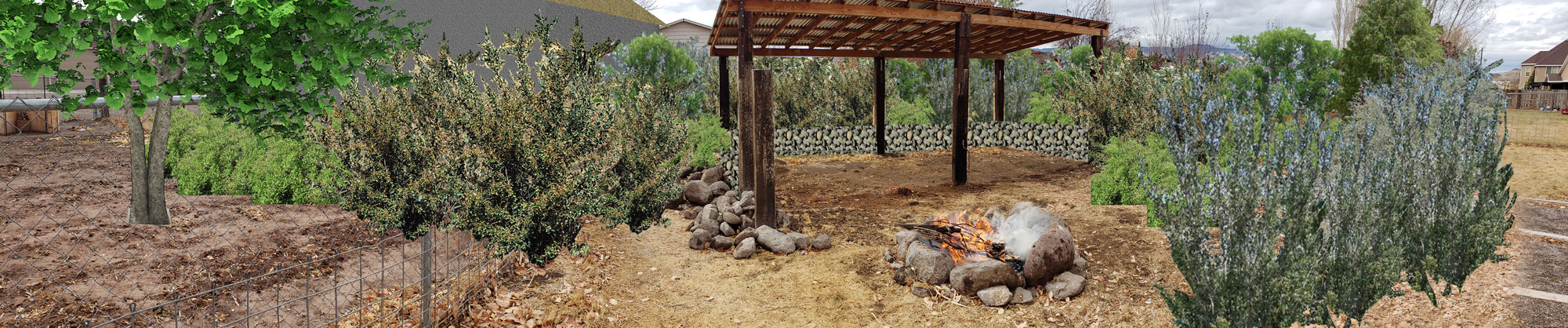 Once the spaces are defined we can start filling in with smaller shrubs. We may even move the garden and plant in front of the garage, then we wont have to look at it. 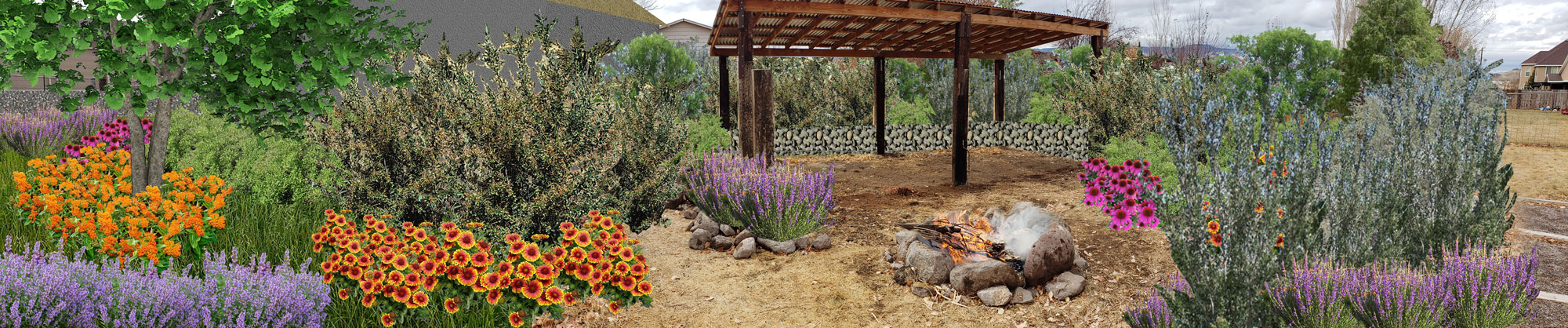 That's when it gets really fun and we can start adding in grasses and perennials to cover the ground plane and add pops of color. Its also great for attracting bees, butterflies, and dragonflies so we have more reason to sit back here on a lazy Saturday afternoon. 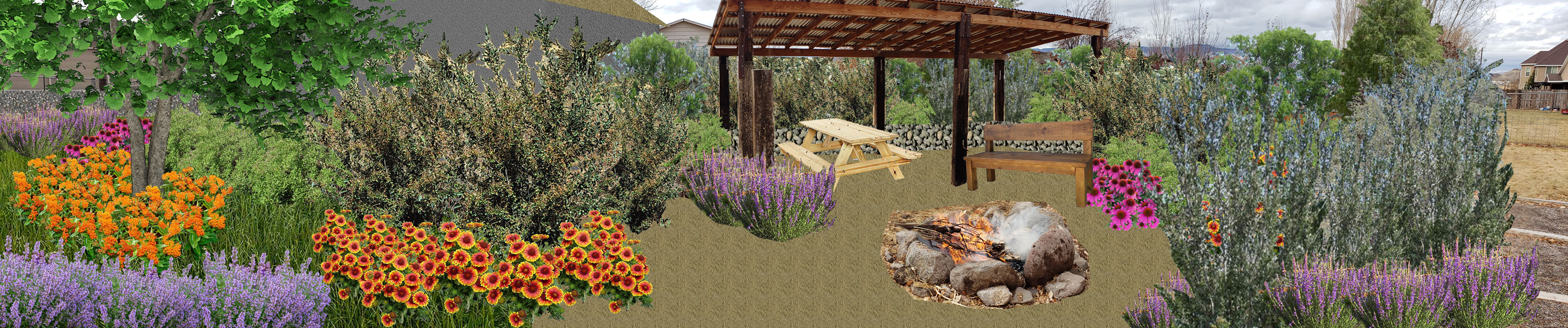 We will finish off with walking paths and some furniture. It is going to take a while to put all the plants in and have them grow enough to accomplish our goals. But in the end it will provide us a comfortable place to enjoy the outdoors, a sense of being in the mountains (right out our back door), fruit for yummy treats, and an easy to maintain, low-water landscape (which will help keep those annoying weeds away). And it can all be done over time, as the budget allows.
Lots of places offer landscape design services and many of those will tell you about their designer's years of experience. So why is there a distinction between a Landscape Designer and a Landscape Architect.
A Landscape Designer can be anyone. They may have a degree in Landscape Architecture. They may have a degree in Horticulture. They may have years of experience working for a Nursery or Landscape Contractor. A Landscape Designer could be anyone with any amount of experience. So if you are considering hiring someone who is a designer, you really need to pay attention to what kind of training they have and what their experience is like. Some designers are really good, but their is no minimum standard for being a Landscape Designer. A Landscape Architect is required to be licensed. That license means they have at least a bachelors degree in Landscape Architecture and have passed a national exam. That national exam includes design, lighting, grading and drainage, conceptualizing, planning, and a lot more. The test is difficult enough that less than 20% of people pass the test the first time. Many states require two years of work experience before they will allow you to take the test. Many states also require that a Landscape Architect participates in continuing education to maintain their license. So while it is still important to verify the experience of a Landscape Architect, you already know that they meet the state's minimum requirements and competency for performing the work. A Licensed Landscape Architect is also a Certified Irrigation Designer and can prepare Site Plans. A good designer, licensed or otherwise, will have a variety of experience and a system that involves the client. Many contractors and nurseries offer a basic design service where they will put plants on a plan for you. It is very affordable. Consider though, you will have to live with that yard for years. It is what you see every time you come home. Its where you spend time on the weekends. Your yard should be a reflection of you, your house, and how you will use it for years to come. There is nothing so annoying as putting in a new plant just to go out a few months later and see that the neighborhood wildlife has been feasting on your plants. Some animals tend not to eat certain plants, but when an animal is hungry and has nothing else, they will eat anything. So here are 10 plants that should be avoided when hungry animals are anywhere nearby.  In no particular order: 1 - Cercis canadensis (Eastern Redbud) - a beautiful small tree and loved by many animals 2 - Euonymus - a popular hedge bush with varieties including variegated leaves and Burning Bush all of which are super tasty to wildlife. 3 - Hemerocallis (Daylily) - they come in varieties other than yellow and all make a sweet treat for animals. 4 - Hosta - they are great for shade, have lots of varieties and animals will eat them like crazy. 5 - Rosa (Roses) - they look mean, but they taste so sweet to those crazy animals. 6 - Tulipa (Tulips) - tasty on top and tasty on bottom, animals will leave nothing behind. 7 - Violas or Pansies - It doesn't matter that winter cold might kill them because they aren't likely to make it through summer. 8 - Berberis (Barberry) - tasty to rabbits and other critters, their berries will bring hungry animals running. 9 - Prunus cistina (Purpleleaf Sandcherry) - not as thorny as Barberries, but just as tasty. 10 - Aster - Lots of varieties to tempt those little critters into dining at your yard. 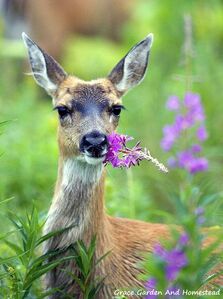 Is there anything to watch for in animal resistant plants?
Many animals do not like strong smelling plants, so even though there is no guarantee and Voles and Gophers will eat anything green and juicy, there are a few plants that are safer than others. Consider planting Alliums (Garlic, Onions), Salvia (Sages), Nepeta (Catmint), Mentha (Mints), Geraniums, or other plants which are tough, prickly or fuzzy. Though, don't think evergreen needles are safe, they might be pointy but some are still tasty. Also consider planting native plants since they are used to adapting to the native wildlife and may be able to handle the munching. 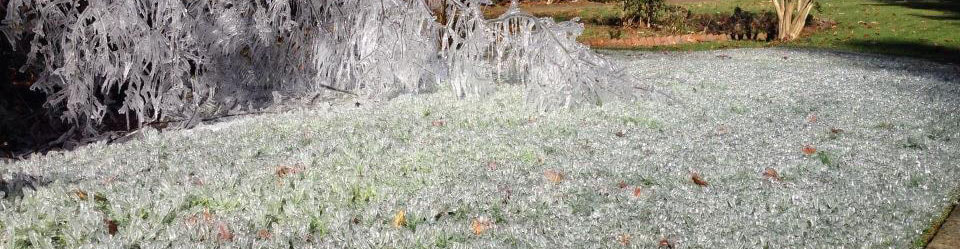 It was surprising last week when I went walking in the morning and several houses in the neighborhood looked like the image above. I see the farmers coating their fields in ice, but to see half a dozen homes with lawns of sharp, pointy icicles was something new.
So what does happen when we accidentally freeze our plants? Lawn is fine with a layer of frost and is adapted to being frozen with snow in the winter. But during the fall, lawn under goes a process to change from the flexible green leaves we love to a more durable brown leaf in the winter. The winter change helps the leaf blades to handle the freezing temperatures and moisture. Being coated in ice during the fall can cause cell damage to the leaf blades and, if stepped on, will break the grass blade. Damage in the fall can slow down the return from dormancy in the spring, allow for diseases or even cause lawn death. So how do we care for our lawn in the fall? Never water lawn overnight when the temperatures will be near freezing. Lawns need less water starting in September and sometimes wont need additional water in October. If Mother Nature is not cooperating come October, consider watering, no more than once per week, during the day. Plants will take up the most nutrients and water between temperatures of 50 and 60 degrees. During the fall your plants are working to go into dormancy, part of dormancy is having less water, so over-watering in fall can cause your plants to not be ready for winter. Fall is also a good time to apply a fall fertilizer and aerate your lawn. In dry climates, like ours, lawns also like to be left a little long. If the lawn is too short, it will need more water during the winter and spring. If the lawn is too long (matting down), then the lawn will be more susceptible to disease and damage. Fall is also a great time to spray those pesky weeds. Spraying weeds after the first frost and before dormancy will increase your chances of killing the weed roots and can decrease your weeds come spring. Putting the lawn to bed for winter in a healthy way will help it be stronger and greener come spring and summer. |
AuthorLandscape Architect, Lover of the Outdoors, and Caretaker of a Husky. Archives
July 2024
Categories |


 RSS Feed
Site powered by Weebly. Managed by SiteGround