
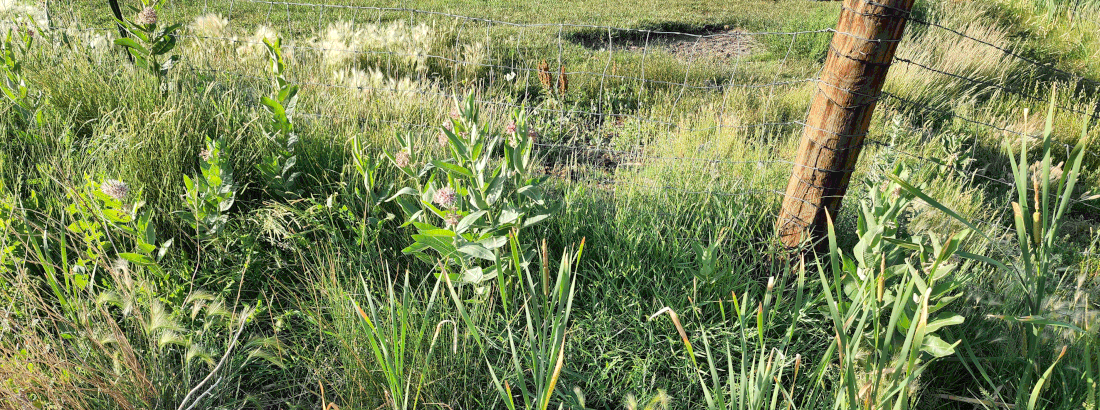
 I was so excited to see these growing along a ditch this year. I'm sure I pulled many Milkweeds out of the ground when I was younger. Now I don't see them anywhere. I've been trying to grow some in my yard, but I'm so much better at killing plants than nurturing them. But, this year, I finally found the right combination and got these beauties to grow and bloom. 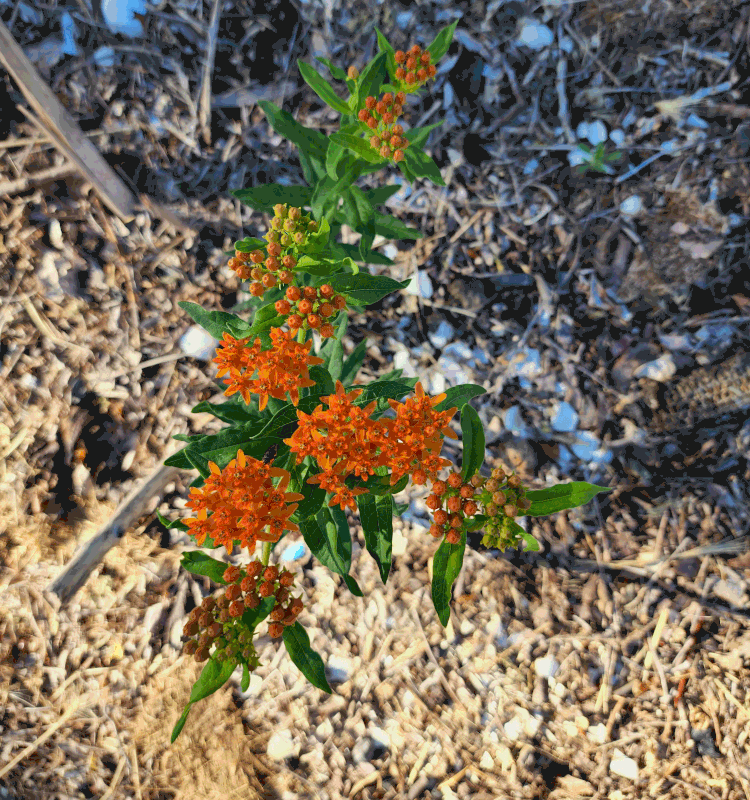 It seems a little strange that a group of native wildflowers could be so important and mean so much to people. But Milkweeds/Butterflyweeds are getting to be a big deal. I've been trying to decide how to share my fun flower pictures and flower excitement for a while. Today, the International Union for the Conservation of Nature listed the Monarch Butterfly as an Endangered Species. The Monarch has been a topic for many years as we watch their numbers decline. A lot of times there isn't much a single person can do when it comes to saving an entire species, but this case is different. One of the primary reasons for the decline of the Monarch Butterfly is loss of habitat and food. That habitat and food comes solely from the Milkweed family. Each area across the nation has its own type of Milkweed. These two are the native varieties for Utah. The butterflies eat the nectar from the flowers and lay their eggs on the leaves. Without Milkweed, we have no Monarchs. 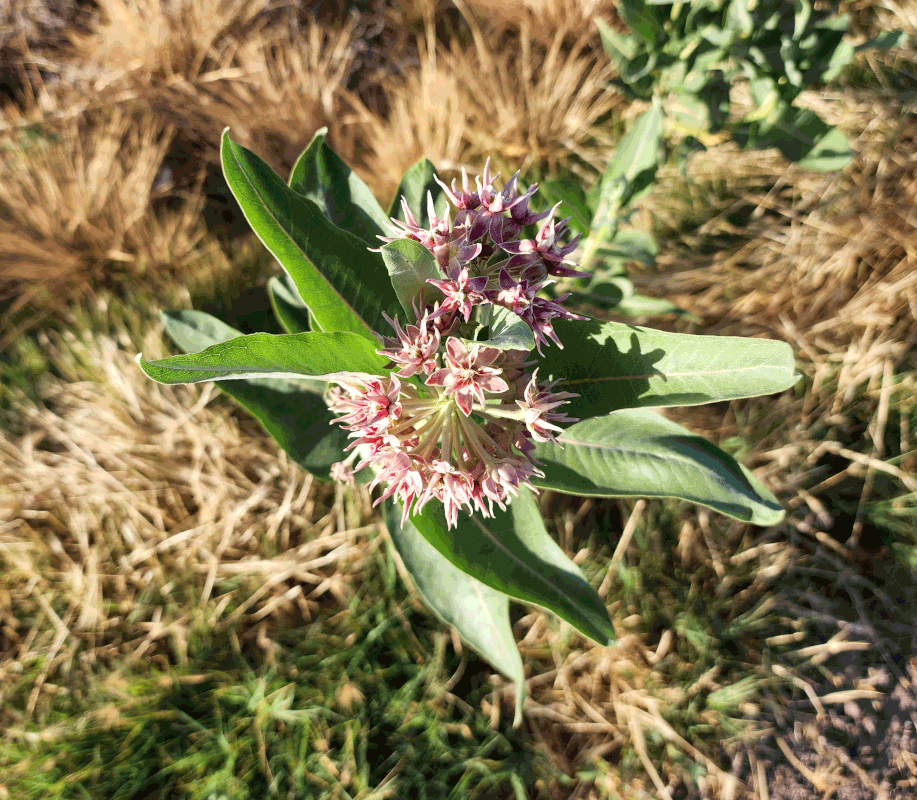 A Milkweed here and a milkweed there, may not be enough. But every time someone leaves a native Milkweed to grow and every time someone puts a few plants in their yard, it adds up, creating a network of habitat. That network of habitat allows the Monarchs to live and safely make their annual north and south migration. Besides, who doesn't want to sit outside on a cool evening and watch the butterflies flying around their yard.
0 Comments
 Sometimes it feels like the small things we do can't really make a difference in the larger world around us. I listened to a webinar this week about irrigation best practices. They talked about choosing the right parts, looking for a responsible manufacturer, understanding where the parts go at the end of life, but interestingly they started with choosing the right plants. Watering efficiently and responsibly starts with choosing the right plants and putting them in the right spot. They talked about making sure that you choose plants that will thrive in your situation. Since plants are an investment, then we should be mindful to choose plants that should do well and live up to their potential. It is exciting to see that more and more people are choosing to be mindful about the environment they create and the influence it has on the overall environment. With that I found another article on landscape fabric. This time from the Morton Arboretum. The more people research, the more they learn. This article pointed out that the perforated plastic fabrics can actually become clogged and not allow the water to get to the plants. So you can water your plant a lot, and it will still die from lack of water. So often we do things because that is the way they have always been done. Its what everyone else is doing. Then we wonder why it doesn't work so well for us, why are we having all these issues. With landscapes it is always good to stop and look at what is really happening. If you decide to use fabric, check to make sure the water is still going through, check to make sure your plants aren't being strangled by the fabric, check to make sure the soil isn't being compacted. Check your sprinkling system to make sure all of the heads are pointed in the right direction. Understand when your plants want the water the most and when they are dormant or semi-dormant. Be realistic about your plant choices. Are you planting a picky plant that will require more than you will give it, is there a more responsible option. People love Barberries because of the different leaf colors, but you can plant a Ninbark that has different colors, flowers, is hardier, and uses less water. It may cost more for a better plant, but remember the costs for water, maintenance, pruning, and fertilizer too. When you plant more responsible plants, nurture them appropriately and understand the environment around them, you improve the environment. Every improvement made spreads into the neighboring areas and continues out like ripples in the water. They are small steps, but they add up over all.
With highs at or near triple digits last week and now this week, its hard not to think about the heat and cooling off. Sebastian may light to sun bathe when it is 100 outside, but not me. 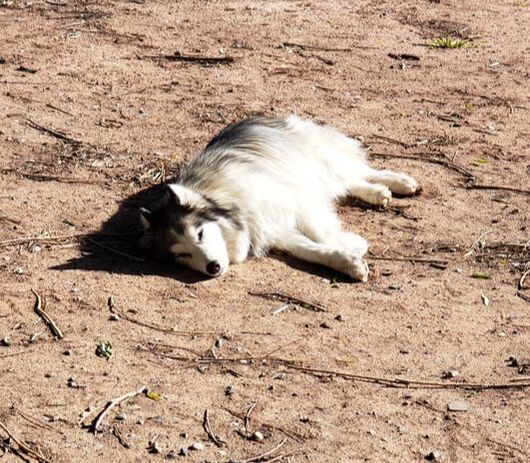 I'm all for the shade or staying in with the air conditioning. There are things you can do with your landscape to make inside your house more comfortable. Deciduous trees are great for providing shade in the summer and still allow the warmth from the sun in the winter. Planting a medium to large shade tree on the south side or west side of your house will help to shield your home from the sun's heat in the summer. You want to plant the tree close enough to shade the house, but not so close that it can later cause damage to the house. Generally, large trees don't need to be any closer than 30 feet from the house and still are effective at 50 feet. You want the tree close enough that it will shade the house starting in late afternoon, but not so close that the branches overhang your roof.
Rock mulch works to hold back the weeds and is generally low maintenance, but it can make your yard and home feel warmer. A vegetative groundcover, like lawn (though other plants are more effective) can make the surrounding are warmer. The cooler the air around your house, the cooler the air inside your house. Shrubs around the home's foundation also help to keep the home cooler. There are many ways to provide passive cooling to your home and the yard around it. Thinking of these options when you consider changes to your landscape will help you enjoy the space more and feel more comfortable when you are inside. Passive cooling by shading your home can also save you money for years to come. The question is always, when is it safe to plant. Many plants you can safely plant once the ground is thawed. New plants will require watering. So it is good to hold off planting until you can safely and regularly water the new plants. Plants do not like being coated in ice and the ice can cause cell damage, so watering should take place when the temperatures are safe from freezing and the water can be absorbed before the temperatures drop to freezing. Some perennials are more sensitive when newly planted and should be held off until after the last frost. This also applies to many annuals and vegetable plants. State Extension offices will post average last frost dates for each area, just make sure that you are looking at your specific area. Many people in Utah go by Mother's Day as the average last frost, but in Sevier County and other parts of Central Utah, the average last frost isn't until Memorial Day. A good way to tell is when all the established plants are in full leaf, then it is typically safe to plant. This year, we are having a Memorial Day Cold Snap Surprise. This is why the recommendation for us is to wait until after Memorial Day to plant cold sensitive plants. If you do have a cold sensitive plant and the temperatures become dangerously cold there are a few tips and tricks you can use to protect your plants. Covering the beds at night works great for smaller plants and gardens. Creating a hot cap, water wall, or other protective enclosure for individual plants can also work well. If you have a larger plant, like a tree, than you can wrap the trunk (though be cautious about leaving a wrap for too long as it can delay growth or encourage insect infestation) or you can string incandescent Christmas lights around the plant and leave them all night long. The heat the lights put off will keep the plant warm throughout the night. Many people will do this to keep Cacti alive in colder regions. Spring and Fall are great times to install new plants. Be careful about planting in the fall, some plants, like perennials, can require time to get established before the cold hits and will not do well planted in fall. Once the summer temperatures get above 90 degrees, the plants are more likely to go into shock. Most will recover, but you will need to be mindful of the plants and apply extra water (at night) to keep them alive and healthy. Here is Part 4 in our series of springtime activities and fun in the yard, and this one is for the children again.
11 - Make a bird feeder - there are so many options whether it's birdseed rolled onto toilet paper roll or a more complex reusable feeder. Pick one that is right for you, your children, and your yard then wait and see how many birds stop by for a snack. 12 - It's always fun in the spring to watch as the plants awake from winter. Take time every few days to see what plants have buds and which buds are opening. Watch as grasses and flowers emerge from the ground. 13 - Check out the internet for a variety of kids crafts that use leaves, twigs, and seeds. You can make dragonflies out of twigs and maple seeds or weave something with willow branches. 14 - Sometimes we forgot the wonder of simple things. Have a camp out in your own backyard. Bring out a tent or sleep under the stars. If you don't have a BBQ or Fire pit, you can buy a simple single use pan to create a little ambiance. 15 - As long as you are lighting things on fire, why not roast some hot dogs. 16 - Play Games! The best part of childhood was all the games we used to play in the yard from Frisbee and ball, to tag, hide and seek, kick the can, Annie-I-Over, Red Rover, mock battles, and so much more. 17 - Go on a rock hunt. See who can find the most colorful rock, the most interesting shape, the most unique. Go up in the foothills and see what minerals and rocks you can find and identify. 18 - Create something out of rocks or items found in the yard. Recycled art can be fun and entertaining. Consider having an art show and contest within your family, neighborhood, or town. 19 - Hide special "Love" rocks around town. Find good size rocks, paint them with fun colors and right special messages on them. Then hide the rocks around town and let people come onto the surprise of finding them. 20 - There are lots of challenges going on social media right now. Considering having a dance off or acting out your own show or movie. I think we got lost there for a little bit. So here is the continuation of things you can be doing outside in your yard to relieve the boredom and isolation of social distancing.
Things to do in your Yard (continued) 11- Lay a stepping stone path - why walk on dirt or patchy lawn when you can lay down a few stones and have an actual path. You can lay down more stones and make a more formal path or just lay down a few and have an informal path. If you read or first 10 ideas for activities with kids then this is a great use for those custom concrete pavers you made with the kids. 12- If you have rock mulch in your yard, now is a good time to pull of the rocks, clean them out, check the fabric, and relay everything down. You can also add more rocks or a different color of rock mulch. This is also a great time to add gravel to a parking area or right of way edge. 13- Since we are talking rocks, why not consider adding a decorative boulder or two to your yard. They add year-round vertical interest and they restrict the growth of weeds. 14- Spring is a great time for trimming things back and easing your summer maintenance load. Why not take this time to pull the lawn away from your tree trunks. Every time you edge next to a tree you end up damaging the tree and increasing the chance of diseases and insects infesting your trees. Lawn also has a hard time competing for resources when it is close to the trunk. 15- Maybe you have the block or concrete landscape edge sections that never stay put. Now is a great time to replace that edging with something more permanent like concrete or aluminum. Shallow roots will always push edgings around, but the precast blocks will always move more than a continuous edge. 16- There is nothing like a fresh coat of paint to spruce things up. Spring is a great time to repaint or seal the fence and/or deck. You might enjoy it so much that you'll want to touch up the paint around the house too. 17- Of course, if your going to repaint the fence, you might want to check for damage and replace any pieces that need to be fixed. A well-maintained fence can go a long way in improving the look of a yard. 18- Maybe you have a drainage issue or the downspout on the rain gutter is broken. Now is a great time to implement a drainage ditch or channel to more water away from the house. You can also put a decorative rock channel in just to add interest and variety to the yard. You might consider replacing the broken downspout with a decorative rain chain. 19- If this confinement continues, you might find yourself entertaining the family at home more this summer. Now is a great time to put in a new patio/deck or extend an existing one. Patio areas can be as simple as a little edging and some compacted gravel. 20- Once the rain starts to clear out a little more, its time to clean the patio furniture. Start the summer BBQ season off with clean furniture that is ready to host. Spring is a great time to clean and refresh. The weather is cool enough to enjoy being outside and the fresh air always feels good. We still have more suggestions for children to go, so keep checking back. There were so many ideas generated from the last post that we have three more compilations to go. There are none more stir crazy than the children. So here are ten ways to involve, educate and entertain children in the landscape.
1 - The bugs are starting to come out with the warm weather. Children often enjoy looking for worms, caterpillars, butterflies, bees, etc. Not only can it be fun to see how many different creatures are living in your yard, but it is good to know who finds your yard comfortable. Many insects keep our plants and soils healthy. Other insects will damage the landscape and should be discouraged. 2 - Children love craft projects. With a few scraps of wood, an old dish, or any multitude of recycled items you can make a simple butterfly feeder. While plants are always the best, a little supplemental food never hurts, especially early in the season when plants are not blooming yet. 3 - Another fun project is to make bee nesting blocks, bug houses, or butterfly nesting boxes. There are a wide variety of patterns out there, just don't fall for the multi-species boxes. Too many bugs in the same box and diseases are more likely to spread. Also, make sure your materials will stay dry on the inside or dry out quickly. Lots of wet cardboard will also cause illness in our garden friends. 4 - Ever just want one or two stepping stones? A bag of concrete, some objects from around the yard and a little mess will get you some fun stepping stones. Simple concrete stones can be mixed in a bucket and formed with a commercial mold, some wood, a plastic bin, or even by hand. You can decorate your stone with leaves, hand prints, pebbles, toys, etc. 5 - It may be an old thing to do, but on rainy days like today, have some fun making mud pies. Don't be afraid of the mess. 6 - Early spring is a great time to plant seeds. Whether you want more lawn or thicker lawn. Maybe you want some flowers or you are ready to plant a vegetable garden. Let the children go out and start planting those seeds for you. The rows might not be as straight, but mother nature doesn't plant in straight lines either. 7 - How about creating a treasure hunt? You can think of a list of items commonly found outside (try not to kill any bugs) and see who can find them all first. Things to look for might be bugs, worms, buds, twigs, flowers, leaves, green grass, deer droppings, etc. 8 - Easter is coming why not decorate your fence in preparation. Use ribbons, streamers, pictures, marbles, or sidewalk chalk to create patterns of images on your fence. Let their imaginations go wild, you can always have them clean it up next week (double win). 9 - Create a fairy or goblin garden. Let them find materials for creating houses and shelters. They can design play or seating items for their unseen friends. There are a lot of ideas online. Fairy gardens can be created under a tree, in a pot, under the deck, any little nook or cranny will work great. The children can then spend all summer looking for inhabitants and changing things around. 10 - Let the children create their own garden. Give them a small patch of ground. Let them plant anything they want, whether its produce, flowers, twigs, rocks, or bugs. Its a great way to teach them about nature and responsibility. We're not done yet, so keep checking back for more idea. Before you start to get stir crazy with all the social distancing and isolation talk, start planning ways to spend time in your yard. Some items may not be as exciting as others, but the fresh air and Vitamin D will do you good.
Productive Things to Do in Spring (in no particular order) 1-Plant cool season crops, once the ground thaws (and possibly the irrigation company turns on the water), the ground is safe for planting crops like peas, radishes, broccoli, spinach, cabbage, beets, turnips, lettuce, and cauliflower. Even if it is just a small space, fresh produce can be tasty and rewarding. 2-If your not ready to plant, or you haven't had a garden before, now is a good time to start preparing ground. This might be adding mulch or compost to your soil, or possibly tilling the soil if it is heavily compacted. You might even consider using some timbers, commercial kits, or recycled materials to create garden boxes to make the gardening easier. There are lots of options for creating quality soil in your garden beds. 3-Its rarely too early to get a handle on the weeds. If the weeds are coming up then it is time to apply pre-emergent herbicides like "Preen" or "SnapShot". The pre-emergent herbicide will help to prevent new seeds from sprouting in the ground. For weeds that are already there mechanical control is good, though some weeds will be treated more effective with chemical controls. 4-Now is a good time to prune ornamental trees, shade trees, and shrubs. As the leaves start to emerge, look for areas that are dead and remove them to encourage the plant to put growth energy into the remaining live branches. 5-Now is a great time to fertilize lawns and any other plants that could use the extra nourishment. One great way to get lasting nutrients to your shrubs and trees is to apply an organic bark mulch to the soil beneath the plants. 6-Aeration is better done in the fall here, but for clay soils that haven't been aerated, now is better than never. Aeration helps to get oxygen to the lawn roots and allow the soil space to move around and loosen up. 7-Once the water is turned on, take this cool time to check out your existing sprinkling system, or consider installing a new system. A well tuned sprinkling system will save water, money, and help your plants thrive. 8-Now is a great time to consider if there are any plants you would like to change in your yard or areas where you would like to add more plants. Spring is the best time of year to plant new plants. 9-Start planting flower seeds to increase your habit offerings (bring in more Hummingbirds and Butterflies this year) and add more color and interest to you yard. This is also a great way to involve any children you might have. 10-Maybe you would like to change your yard up a little bit. Now is a great time to layout a new shrub, flower, or garden bed. Pull out the hose, spray paint, or anything you can find and layout the new beds. You can move and adjust the lines as much as you want. That will give you a chance to see how the bed will look before you start doing actual work. We have lots more ideas, so keep checking about. Some of the ideas are even focused on entertaining children. With all this talk of germs and illness, I thought a little medicine was in order. There are several native plants in Utah that have medicinal properties. We may not use them anymore, due to commercial products, but it is always nice to know what various plants can be used for. 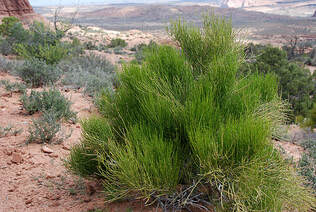 Ephedra viridis - Green Mormon Tea Not only does it have unique green stems with tiny leaves, our native Ephedra (with only low levels of Psuedoephedrine) helps with the common cold, clears congestion and other respiratory ailments, and urinary tract infections. 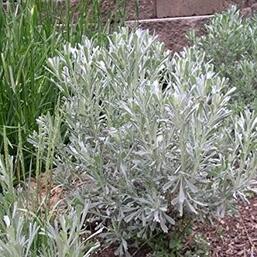 Artemisia tridentata - Bigtooth Sagebrush It is true, that "weed" that grows everywhere in Utah has medicinal uses. Sagebrush has been used to treat headaches, diarrhea, sore throat, vomiting and even bullet wounds (don't try that one at home). The made a tea of the leaves and used it for hair tonics and bee stings. The tea also worked for night sweats. 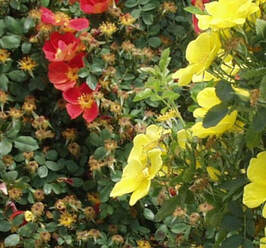 Rosa sp. - Rosehips We are so trained to deadhead the roses that we fail to benefit from rosehips. They are quite edible, and are supposed to be tasty. They are high in Vitamin C and bioflavonoids. Rosehips are also good for cleansing and colds and the flu. 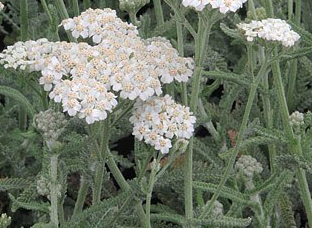 Achillea millefolium - Common Yarrow This little flower is another one that is good for helping with the common cold, flu, and fevers. It can also help with painful menstruation. It has even been known to help reduce bleeding. 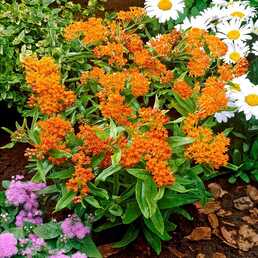 Asclepias tuberosa - Butterfly Weed
This is one of the ecologically "IN" plants. As the food source for Monarch Butterflies it is critical to the survival of Monarchs. Asclepias was named for the Greek God Asklepios - herbalist and physician. Butterfly Weeds are known to treat lung ailments. A few more of these planted around and we would all be breathing easier. I went to a tree pruning workshop over the weekend. With all the questions that were brought up, the series that stuck the most to me, was how do you know you are hiring the best landscape contractor or maintenance company and how do you know they are doing things correctly. So often we trust that if they are still in business, they must be doing things good enough. It was interesting to learn that there are only 5 certified arborists within 100 miles of Richfield, only one of which is within 30 miles. That means, unless you are lucky enough to find that one company, you really have no guarantee that the guy pruning your tree is trained and current on the healthiest and best practices for pruning your trees. That may not be a big deal for your shade trees, but it could be huge for your fruit trees.
So, how do you, as a resident, know who to hire or how they should be doing things. Here in Utah a great resource is the USU Extension (extension.usu.edu). They will have literature and links for all sorts of landscape, garden and home issues and questions. Much of the literature is for the entire state of Utah, but some things (like how frequently you need to water lawn) are set up by county. Another good resource is the International Society of Arboriculture (isa-arbor.com). On their website you can search for an arborist including the name of the arborist and their company. You can also find detail sheets for how to plant trees and shrubs, or even installing a sprinkler system. Another place to look for information on nursery plants is americanhort.org. They can help you see what you should be looking for in nursery plants and what information you should be able to find on the plant labels. A good thing to look for when hiring a company is their business licensing. The state licenses businesses in general, individuals in specific fields (like Landscape Architects), and then specific businesses. You can research a professional license at dopl.utah.gov or a general business license at secure.utah.gov/bes. |
AuthorLandscape Architect, Lover of the Outdoors, and Caretaker of a Husky. Archives
July 2024
Categories |
 RSS Feed
Site powered by Weebly. Managed by SiteGround