
|
A while back a saw a post about the plight of the Monarch Butterfly. One person asked what we could do about a species going extinct. Another person responded that there was nothing that we could do. How can you or I as an individual, with minimal resources, help an entire species from going extinct. Picture this, you are on a long road trip. You hit that lonely stretch of road where the next services are 100 miles away. What do you do? You check gas, you check food and water, you make sure that you are set to travel another 100 miles. Maybe you stop just in case. Now what happens if that next gas station is closed. What will you do? You run out of gas, nobody is around, and you have no cell signal. You are stuck. All you need is one gas station or one lonely house. This is a major issue that the little Monarch Butterflies are having. They have a very specific food supply, the Milkweed or Butterfly Weed. They wont eat anything else. When their native habits were developed for housing and roads, their food source was removed. 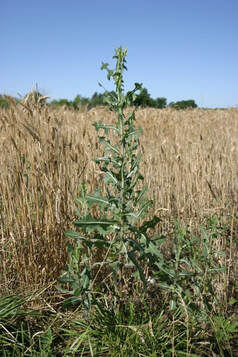 I said Milkweed, now you're thinking about those hideous, ugly, milky weeds that are trying to invade your yard. Maybe they look something like this guy on the left. That is not what we are talking about, this ugly guy is called Prickly Lettuce, though he does have milky sap. Milkweeds, which are not very weedy at all, are perennials that are native to much of the United States. There are several varieties, for Utah, the most popular variety is the Butterfly Weed that blooms Orange in summer and fall. They can be very showy and have unique blooms. They are hardy, don't require much water, and they don't take a lot of work. So they are an easy plant to keep in your yard. They look great massed, but can be used as an accent plant too. It would be great if everyone planted an area of native plants, or a miniature prairie, or just a few plants in their yard. But maybe you don't want to change things that much. Consider this, take our road trip scenario and put it into the perspective of our poor little butterfly. The Monarch can cover a large territory. She's been flying around looking for food for quite some time. She can't find anything that will suit her. She's growing tired, she's starving. She only needs one plant. One plant can sustain multiple butterflies. Every house, even apartments, can find a space for one plant, or one pot. Sometimes making a difference is hard, but just a few scattered plants every mile or so, can make a significant difference in the survival of the Monarch Butterfly. You CAN make a difference.
0 Comments
I was watching a USU webinar about the benefit of trees. We all know they provide much needed shade and are pretty to look at, but do trees provide other benefits too. They have done lots of studies about the economic implications of planting trees. They have even shown that tree pollen has less allergens then other plants. Some new studies are showing that a 35% to 40% tree canopy can help combat illnesses like depression and ADHD. Beyond that, they are finding that trees also help with asthma and cardiovascular diseases. To a lesser degree the studies are showing that trees can help obesity and diabetes. They can even improve healing and recovery. It is pretty cool the effect that trees can have on our lives.
Planting Trees for Health and Wellness Protection First - Trees help to reduce stress, mental illness, and provide a sense of social cohesion. Second - Trees can improve birth weight, provide pain relief, they reduce crime, and improve thermal comfort. Third - Trees increase the desire for activity, they help with weight loss, provide UV protection, and can improve sleep. No wonder why the animals and mother nature love trees so much. |
AuthorLandscape Architect, Lover of the Outdoors, and Caretaker of a Husky. Archives
July 2024
Categories |


 RSS Feed
Site powered by Weebly. Managed by SiteGround