
|
Here is Part 4 in our series of springtime activities and fun in the yard, and this one is for the children again.
11 - Make a bird feeder - there are so many options whether it's birdseed rolled onto toilet paper roll or a more complex reusable feeder. Pick one that is right for you, your children, and your yard then wait and see how many birds stop by for a snack. 12 - It's always fun in the spring to watch as the plants awake from winter. Take time every few days to see what plants have buds and which buds are opening. Watch as grasses and flowers emerge from the ground. 13 - Check out the internet for a variety of kids crafts that use leaves, twigs, and seeds. You can make dragonflies out of twigs and maple seeds or weave something with willow branches. 14 - Sometimes we forgot the wonder of simple things. Have a camp out in your own backyard. Bring out a tent or sleep under the stars. If you don't have a BBQ or Fire pit, you can buy a simple single use pan to create a little ambiance. 15 - As long as you are lighting things on fire, why not roast some hot dogs. 16 - Play Games! The best part of childhood was all the games we used to play in the yard from Frisbee and ball, to tag, hide and seek, kick the can, Annie-I-Over, Red Rover, mock battles, and so much more. 17 - Go on a rock hunt. See who can find the most colorful rock, the most interesting shape, the most unique. Go up in the foothills and see what minerals and rocks you can find and identify. 18 - Create something out of rocks or items found in the yard. Recycled art can be fun and entertaining. Consider having an art show and contest within your family, neighborhood, or town. 19 - Hide special "Love" rocks around town. Find good size rocks, paint them with fun colors and right special messages on them. Then hide the rocks around town and let people come onto the surprise of finding them. 20 - There are lots of challenges going on social media right now. Considering having a dance off or acting out your own show or movie.
0 Comments
I think we got lost there for a little bit. So here is the continuation of things you can be doing outside in your yard to relieve the boredom and isolation of social distancing.
Things to do in your Yard (continued) 11- Lay a stepping stone path - why walk on dirt or patchy lawn when you can lay down a few stones and have an actual path. You can lay down more stones and make a more formal path or just lay down a few and have an informal path. If you read or first 10 ideas for activities with kids then this is a great use for those custom concrete pavers you made with the kids. 12- If you have rock mulch in your yard, now is a good time to pull of the rocks, clean them out, check the fabric, and relay everything down. You can also add more rocks or a different color of rock mulch. This is also a great time to add gravel to a parking area or right of way edge. 13- Since we are talking rocks, why not consider adding a decorative boulder or two to your yard. They add year-round vertical interest and they restrict the growth of weeds. 14- Spring is a great time for trimming things back and easing your summer maintenance load. Why not take this time to pull the lawn away from your tree trunks. Every time you edge next to a tree you end up damaging the tree and increasing the chance of diseases and insects infesting your trees. Lawn also has a hard time competing for resources when it is close to the trunk. 15- Maybe you have the block or concrete landscape edge sections that never stay put. Now is a great time to replace that edging with something more permanent like concrete or aluminum. Shallow roots will always push edgings around, but the precast blocks will always move more than a continuous edge. 16- There is nothing like a fresh coat of paint to spruce things up. Spring is a great time to repaint or seal the fence and/or deck. You might enjoy it so much that you'll want to touch up the paint around the house too. 17- Of course, if your going to repaint the fence, you might want to check for damage and replace any pieces that need to be fixed. A well-maintained fence can go a long way in improving the look of a yard. 18- Maybe you have a drainage issue or the downspout on the rain gutter is broken. Now is a great time to implement a drainage ditch or channel to more water away from the house. You can also put a decorative rock channel in just to add interest and variety to the yard. You might consider replacing the broken downspout with a decorative rain chain. 19- If this confinement continues, you might find yourself entertaining the family at home more this summer. Now is a great time to put in a new patio/deck or extend an existing one. Patio areas can be as simple as a little edging and some compacted gravel. 20- Once the rain starts to clear out a little more, its time to clean the patio furniture. Start the summer BBQ season off with clean furniture that is ready to host. Spring is a great time to clean and refresh. The weather is cool enough to enjoy being outside and the fresh air always feels good. We still have more suggestions for children to go, so keep checking back. There were so many ideas generated from the last post that we have three more compilations to go. There are none more stir crazy than the children. So here are ten ways to involve, educate and entertain children in the landscape.
1 - The bugs are starting to come out with the warm weather. Children often enjoy looking for worms, caterpillars, butterflies, bees, etc. Not only can it be fun to see how many different creatures are living in your yard, but it is good to know who finds your yard comfortable. Many insects keep our plants and soils healthy. Other insects will damage the landscape and should be discouraged. 2 - Children love craft projects. With a few scraps of wood, an old dish, or any multitude of recycled items you can make a simple butterfly feeder. While plants are always the best, a little supplemental food never hurts, especially early in the season when plants are not blooming yet. 3 - Another fun project is to make bee nesting blocks, bug houses, or butterfly nesting boxes. There are a wide variety of patterns out there, just don't fall for the multi-species boxes. Too many bugs in the same box and diseases are more likely to spread. Also, make sure your materials will stay dry on the inside or dry out quickly. Lots of wet cardboard will also cause illness in our garden friends. 4 - Ever just want one or two stepping stones? A bag of concrete, some objects from around the yard and a little mess will get you some fun stepping stones. Simple concrete stones can be mixed in a bucket and formed with a commercial mold, some wood, a plastic bin, or even by hand. You can decorate your stone with leaves, hand prints, pebbles, toys, etc. 5 - It may be an old thing to do, but on rainy days like today, have some fun making mud pies. Don't be afraid of the mess. 6 - Early spring is a great time to plant seeds. Whether you want more lawn or thicker lawn. Maybe you want some flowers or you are ready to plant a vegetable garden. Let the children go out and start planting those seeds for you. The rows might not be as straight, but mother nature doesn't plant in straight lines either. 7 - How about creating a treasure hunt? You can think of a list of items commonly found outside (try not to kill any bugs) and see who can find them all first. Things to look for might be bugs, worms, buds, twigs, flowers, leaves, green grass, deer droppings, etc. 8 - Easter is coming why not decorate your fence in preparation. Use ribbons, streamers, pictures, marbles, or sidewalk chalk to create patterns of images on your fence. Let their imaginations go wild, you can always have them clean it up next week (double win). 9 - Create a fairy or goblin garden. Let them find materials for creating houses and shelters. They can design play or seating items for their unseen friends. There are a lot of ideas online. Fairy gardens can be created under a tree, in a pot, under the deck, any little nook or cranny will work great. The children can then spend all summer looking for inhabitants and changing things around. 10 - Let the children create their own garden. Give them a small patch of ground. Let them plant anything they want, whether its produce, flowers, twigs, rocks, or bugs. Its a great way to teach them about nature and responsibility. We're not done yet, so keep checking back for more idea. Before you start to get stir crazy with all the social distancing and isolation talk, start planning ways to spend time in your yard. Some items may not be as exciting as others, but the fresh air and Vitamin D will do you good.
Productive Things to Do in Spring (in no particular order) 1-Plant cool season crops, once the ground thaws (and possibly the irrigation company turns on the water), the ground is safe for planting crops like peas, radishes, broccoli, spinach, cabbage, beets, turnips, lettuce, and cauliflower. Even if it is just a small space, fresh produce can be tasty and rewarding. 2-If your not ready to plant, or you haven't had a garden before, now is a good time to start preparing ground. This might be adding mulch or compost to your soil, or possibly tilling the soil if it is heavily compacted. You might even consider using some timbers, commercial kits, or recycled materials to create garden boxes to make the gardening easier. There are lots of options for creating quality soil in your garden beds. 3-Its rarely too early to get a handle on the weeds. If the weeds are coming up then it is time to apply pre-emergent herbicides like "Preen" or "SnapShot". The pre-emergent herbicide will help to prevent new seeds from sprouting in the ground. For weeds that are already there mechanical control is good, though some weeds will be treated more effective with chemical controls. 4-Now is a good time to prune ornamental trees, shade trees, and shrubs. As the leaves start to emerge, look for areas that are dead and remove them to encourage the plant to put growth energy into the remaining live branches. 5-Now is a great time to fertilize lawns and any other plants that could use the extra nourishment. One great way to get lasting nutrients to your shrubs and trees is to apply an organic bark mulch to the soil beneath the plants. 6-Aeration is better done in the fall here, but for clay soils that haven't been aerated, now is better than never. Aeration helps to get oxygen to the lawn roots and allow the soil space to move around and loosen up. 7-Once the water is turned on, take this cool time to check out your existing sprinkling system, or consider installing a new system. A well tuned sprinkling system will save water, money, and help your plants thrive. 8-Now is a great time to consider if there are any plants you would like to change in your yard or areas where you would like to add more plants. Spring is the best time of year to plant new plants. 9-Start planting flower seeds to increase your habit offerings (bring in more Hummingbirds and Butterflies this year) and add more color and interest to you yard. This is also a great way to involve any children you might have. 10-Maybe you would like to change your yard up a little bit. Now is a great time to layout a new shrub, flower, or garden bed. Pull out the hose, spray paint, or anything you can find and layout the new beds. You can move and adjust the lines as much as you want. That will give you a chance to see how the bed will look before you start doing actual work. We have lots more ideas, so keep checking about. Some of the ideas are even focused on entertaining children. With all this talk of germs and illness, I thought a little medicine was in order. There are several native plants in Utah that have medicinal properties. We may not use them anymore, due to commercial products, but it is always nice to know what various plants can be used for. 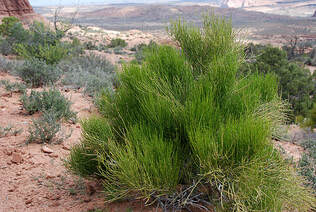 Ephedra viridis - Green Mormon Tea Not only does it have unique green stems with tiny leaves, our native Ephedra (with only low levels of Psuedoephedrine) helps with the common cold, clears congestion and other respiratory ailments, and urinary tract infections. 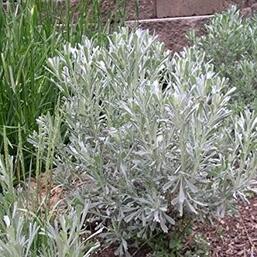 Artemisia tridentata - Bigtooth Sagebrush It is true, that "weed" that grows everywhere in Utah has medicinal uses. Sagebrush has been used to treat headaches, diarrhea, sore throat, vomiting and even bullet wounds (don't try that one at home). The made a tea of the leaves and used it for hair tonics and bee stings. The tea also worked for night sweats. 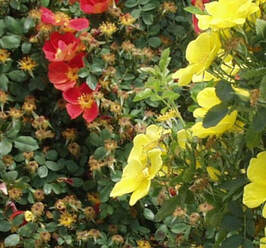 Rosa sp. - Rosehips We are so trained to deadhead the roses that we fail to benefit from rosehips. They are quite edible, and are supposed to be tasty. They are high in Vitamin C and bioflavonoids. Rosehips are also good for cleansing and colds and the flu. 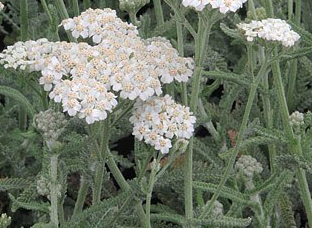 Achillea millefolium - Common Yarrow This little flower is another one that is good for helping with the common cold, flu, and fevers. It can also help with painful menstruation. It has even been known to help reduce bleeding. 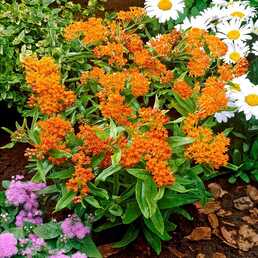 Asclepias tuberosa - Butterfly Weed
This is one of the ecologically "IN" plants. As the food source for Monarch Butterflies it is critical to the survival of Monarchs. Asclepias was named for the Greek God Asklepios - herbalist and physician. Butterfly Weeds are known to treat lung ailments. A few more of these planted around and we would all be breathing easier. I went to a tree pruning workshop over the weekend. With all the questions that were brought up, the series that stuck the most to me, was how do you know you are hiring the best landscape contractor or maintenance company and how do you know they are doing things correctly. So often we trust that if they are still in business, they must be doing things good enough. It was interesting to learn that there are only 5 certified arborists within 100 miles of Richfield, only one of which is within 30 miles. That means, unless you are lucky enough to find that one company, you really have no guarantee that the guy pruning your tree is trained and current on the healthiest and best practices for pruning your trees. That may not be a big deal for your shade trees, but it could be huge for your fruit trees.
So, how do you, as a resident, know who to hire or how they should be doing things. Here in Utah a great resource is the USU Extension (extension.usu.edu). They will have literature and links for all sorts of landscape, garden and home issues and questions. Much of the literature is for the entire state of Utah, but some things (like how frequently you need to water lawn) are set up by county. Another good resource is the International Society of Arboriculture (isa-arbor.com). On their website you can search for an arborist including the name of the arborist and their company. You can also find detail sheets for how to plant trees and shrubs, or even installing a sprinkler system. Another place to look for information on nursery plants is americanhort.org. They can help you see what you should be looking for in nursery plants and what information you should be able to find on the plant labels. A good thing to look for when hiring a company is their business licensing. The state licenses businesses in general, individuals in specific fields (like Landscape Architects), and then specific businesses. You can research a professional license at dopl.utah.gov or a general business license at secure.utah.gov/bes. 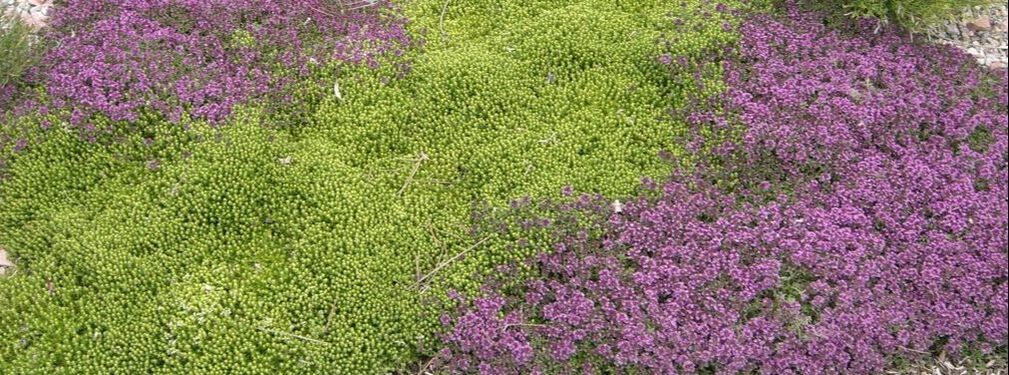 It is warming up and I am done with the cold and snow. I am ready to see some plants leafing out and flowers popping up everywhere. But is my yard ready? It is hard to remember all the work that needs to be done now to make the rest of the year easier. So here is a list of late winter/early spring chores to get your yard ready for a better summer.
1-PRUNE! - If you have fruit trees they should be pruned by mid-March and should not be pruned after buds start to appear. Ornamental and Shade trees can be pruned later. Proper tree pruning will help trees grow big and strong and will reduce the amount of branches that litter your yard whenever the wind blows. This is a good time to prune rose bushes, remove dead branches from other shrubs, and prune bushes for desired shape and size during the summer. This is also the time to cut back ornamental grasses and perennials so that the new sprouts can easily burst forth in the coming months. 2-PRE-EMERGENT HERBICIDE - The weeds are already starting to sprout, applying a pre-emergent herbicide now will help deter the flush of weeds that inevitably come with April's showers. Pre-emergent herbicide will need to be reapplied every two to three months, or any time you disturb the soil. The pre-emergent forms a barrier over the ground that prevents seeds from germinating. So be careful about applying it in areas that you have or will be seeding. Some pre-emergents also need to be kept away from food crops and new plants, so read the lable carefully. 3-CHEMICAL WEED CONTROL - Anytime a weed is vulnerable is a good time to spray it. Spraying in the spring when weeds are just getting established will help deter the weeds throughout the remaining growing season. Fall and Spring are the most effective times to spray super-hardy weeds like Bindweed (aka Morning Glory). 4-PLAN - If there is something you want to change in your yard, make plans to do it sooner than later. Spring is the best time to plant new trees, shrubs, and flowers. Deciding what you want to do now will help you get the plants you want and have them establish faster than waiting until summer. Remember that new plants require extra water, so don't start planting until you can safely run your sprinklers. Our weather is unreliable so don't count on rains to get those new plants established. It is winter. The skies can be gray, the grass is brown, and nothing is really happening outside (not even much snow). Spring is still a month away and it will be another month past that before the plants start coming alive. Many gardens don't start coming alive until May and June. Here are a few plants, that aren't bulbs, to help the garden wake up earlier. They will bring color to the cold months and feed the pollinators early.  Serviceberry (Amelanchier) - With April flowers these shrubs and small trees bring an abundance of white flowers before the plants leaf out each year. They are deer tolerant, hardy, require minimal maintenance, and drought tolerant. A great native to Utah, they also produce blueberry like berries (yum!) in August. There are varieties for small ornamental trees, large shrubs, or columnar hedgerows. 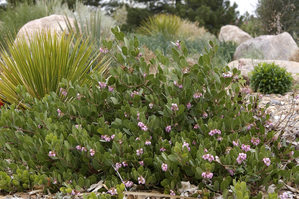 Bearberry (Arctostaphylos) - These evergreen small shrubs and groundcovers have pink to white blooms in March. They are in the Manzanita family, though only up to three feet tall. They tolerate hot sun and cool shade. These also produce small berries. Some varieties will turn red in fall for added year round interest. 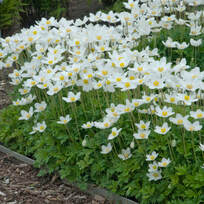 Snowdrops (Anemone sylvestris) - If says snow in the name, it must be blooming early. These lovely little flowers bloom in April. This perennial grows about 18 inches tall and spreads about 12 inches wide. They also have a double bonus of a possible second bloom in cooler autumns and they are fragrant. 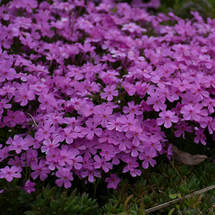 Creeping Phlox (Phlox subulata) - A great flowering perennial or groundcover that blooms in March or April in soft shades of white, pink, blue and purple. These evergreen perennials are drought tolerant, low maintenance, and deer resistant. So they will feed the pollinators and not the deer. They look great as a border plant in flower beds and work well in both annual beds and perennial beds. They may be waterwise, but they will look just as lush as any water hogging. 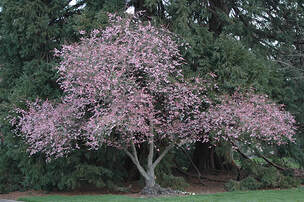 Flowering Cherry Tree (Prunus) - These cherry trees are known for their early spring flowers (before the leaves are out) and not for their fruit. A small ornamental tree, single or multi-trunk, they provide a beautiful accent to the landscape and are a available in a stunning weeping form. They can grow slowly and their water use is a little higher with a moderate rating, which does make them a happy camper for being situated in a lawn area.
 We always keep an eye on the snow levels and how much water has fallen through the winter. This winter may not be as dry as it feels, especially with minimal snow in the past month, but someone sure has been looking for a few snowbanks to play in. We decided to take President's Day and see about finding him some snow. He may not have gotten any fishing in like many others were doing, but he sure did enjoy the snow. My plants may not be getting water this week, but it was good to see lots of snow and ice.  I love plants. I love lots of plants, but I was not blessed with a green thumb. I am pretty good at accidentally killing plants. I was looking at another blog post about hard to kill houseplants. I have killed at least two of the 14 plants on their list and I've only owned about five different types of houseplants. This is probably why I like native plants so much. I need a plant that can thrive on abuse and neglect. We have put 19 plants in our yard in the past three years, eight of them are now deceased. Some got under-watered because I am not good at dragging a hose. Some were eaten by deer. One got kicked out of the house and couldn't take the winter. And I'm still going to claim that one was depressed because our neighbor got rid of it and it just didn't like our yard. But plants are expensive and nobody wants to waist money on a plant that wont survive for even one year. So here is my list of hard to kill plants, aka plants that even I haven't killed. 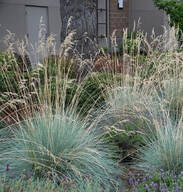 Ornamental Grasses - We have owned Giant Miscanthus and Pony Tail Stipas among others. They settle in and grow fast, only need to be trimmed down once per year, and most don't take a lot of water. Some, like the Stipa will spread seeds and reproduce, so if you aren't into baby grasses everywhere you will either need to collect the seed plumes or put down a pre-emergent herbicide. Others, like the Feather Reed Grass will not self-propagate. Grasses offer a variety of colors, textures and sizes. They also provide year-round interest if you wait until early spring to cut them back. 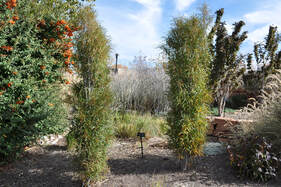 Fineline Buckthorn - I don't know why I haven't managed to kill these, but we have planted them at three different houses and they just keep surviving. They are hardy, low-maintenance and don't need a lot of water. They create a nice tall hedge, with a refined look and don't take up a lot of space. The deer will nibble on them a little bit, but so far they are more likely to trample them than eat them. They can grow slowly, so patience is helpful. 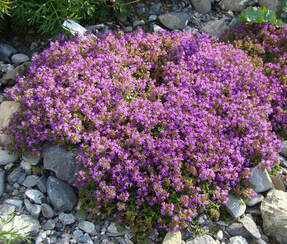 Creeping Thyme - We keep putting our Thyme is tough places and it just doesn't care. We used it in high traffic areas of our park strip and within a year it had filled in and was keeping the weeds back (and I didn't have to mow it). Now it sits at the base of our front steps in our stone addition to the sidewalk. It gets stepped on multiple times a day and doesn't get watered like it should. It doesn't much care. Thyme comes in a variety of colors and is considered evergreen. The Red Creeping Thyme has pink blooms in spring and turns red during the cold months, giving a nice pop of color in winter. Woolly Thyme has a lighter pink bloom and gray leaves. So you can mix the Thyme up and have a variety of interest anytime (any-Thyme) of year. 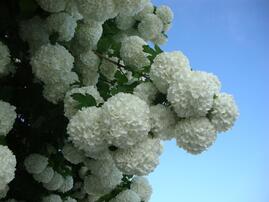 Snowball Bush - Viburnum are actually really good plants. They come in a range of sizes and they aren't water hogs. I grew up with a large one that wanted to take over the world, but you can get them in a refined 3-4 foot size. We planted these as little tublings (twigs) and they were full bushes within two years. They can grow like weeds, so check to make sure it will fit in the space you have. They will take pruning, so you can trim them back if they get too big. Their bloom time is short, but it is quite the show. They are a tough plant that can take a fair amount of neglect. 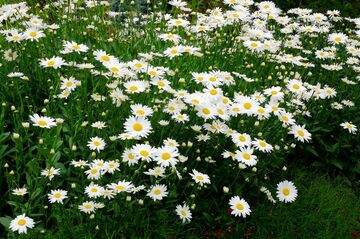 Shasta Daisy - A vigorous and unassuming perennial. They will bloom throughout the summer and only need to be cut back in fall. They don't even need to be dead-headed. We put a little one of these in our yard this year. Our neighbor pulled it out of her yard and left it on the street for dead. I put it in the ground the next day. It gets some water from the lawn sprinklers and anything that drips off of the roof. Still, it set root and was blooming again within a month. There are several to choose from with differing bloom sizes and plant sizes.
|
AuthorLandscape Architect, Lover of the Outdoors, and Caretaker of a Husky. Archives
July 2024
Categories |
 RSS Feed
Site powered by Weebly. Managed by SiteGround